Translate English Into Lithuanian: Simple Guide
Learn to translate English into Lithuanian accurately with this simple, step-by-step guide. Avoid common mistakes and get clear, reliable translations.
You're staring at a paragraph that looked fine in English, pasted it into a translator, and now the Lithuanian version feels almost right, which is somehow worse than being obviously wrong. The grammar looks polished, the words are there, and yet the sentence still sounds like it was assembled by someone who knows the language only from the outside. That's the trap with English to Lithuanian work, the output can look fluent long before it's usable.
Lithuanian isn't a language that rewards lazy copy-paste habits. Linguists often point to it as one of the oldest living Indo-European languages, and modern Lithuanian keeps a highly inflected system with seven cases, so nouns, adjectives, pronouns, and numerals change form depending on sentence role. That's why translate English into Lithuanian is really a workflow problem, not a typing problem, and why tools alone never finish the job. For a quick primer on meaning-level handling versus word-level swapping, see Zemith's note on .
Why English to Lithuanian Is Harder Than It Looks
The first time a marketer sends a product blurb through a free translator, the result usually looks deceptively clean. The nouns are recognizable, the sentence runs without visible chaos, and yet the meaning lands off-center because the grammar choices don't match the job the words are doing. That's the quiet issue with Lithuanian, it punishes English habits that assume word order carries most of the burden.
Lithuanian makes grammar do the heavy lifting
With seven cases, Lithuanian doesn't just decorate words, it changes them based on function. A phrase that feels simple in English can force several morphology decisions in Lithuanian, especially in technical, academic, or statistical text where agreement has to be exact, not approximate. The old “paste, translate, publish” routine falls apart fast once a sentence contains modifiers, numerals, or anything that needs careful case alignment.
Practical rule: if the English sentence has a long chain of nouns, break it before translation. Lithuanian often needs clearer structure than English does.
That's also why literal reordering can be a trap. Lithuanian preserves archaic Indo-European features that make it valuable to linguists, but inconvenient for anyone hoping machine translation will guess the right ending and rhythm every time. If you're translating something public-facing, that extra care is not polish, it's baseline correctness.

Why the “almost right” version causes trouble
The worst English-to-Lithuanian output is the version that looks editable but isn't ready. It can hide a wrong case ending, a mismatched numeral, or a phrase that sounds technically acceptable while still feeling foreign to a native reader. That's especially painful in product copy and documentation, where a small grammatical slip can make the whole page feel untrustworthy.
A good translate English into Lithuanian workflow starts with respect for that structure. It doesn't chase perfect machine output, it assumes machine output needs to earn its way into final text. For a broader view of how literal meaning and context interact in multilingual work, Zemith's article on is a useful companion read.
Decide What Kind of Translation You Actually Need
Before you open any translator, decide what the text is for. A chat message to a colleague, a UI label, a marketing email, and a legal notice all live in different universes, and they don't tolerate the same level of roughness. If you pick the wrong workflow at the start, you spend the rest of the job fixing problems that were baked in from the first sentence.
Match the job to the risk
A short internal note can usually start with machine translation, then a quick human check. Public-facing copy needs a firmer hand, because brand voice, tone, and Lithuanian grammar all have to align at once. Legal, medical, and high-stakes creative work are still in human-translator territory, because “close enough” is a terrible standard when the wording itself carries consequences.
If you're translating books, brochures, or campaigns for readers outside your own market, are a good reminder that translation is only part of localization. The audience decides whether a sentence needs to sound formal, friendly, technical, or persuasive, and that decision belongs before the first draft appears.
Build a quick decision filter
Ask four questions before you translate.
- Who will read this? A teammate, a customer, a regulator, or a student all need different wording.
- How visible is it? Private drafts can be messier than homepage copy or app strings.
- Do terms need consistency? Product names, feature names, and glossary items should stay stable.
- What register fits? Lithuanian formality matters, and the wrong level of address can make text feel off immediately.
If you can't answer those four questions, you're not ready to choose a tool yet.
That's also where a broader translation mindset helps. For a useful contrast with another language pair and workflow, Zemith's piece on is worth a look if you like thinking in terms of fit, not hype. The best translation path is the one that matches the actual use case, not the one with the flashiest landing page.
The Realistic Tool Options Worth Using
There's no shortage of ways to translate English into Lithuanian, but the useful question is which one gets you to publishable output with the least pain. Some tools are better for speed, some for access, and some for phrasing that needs less cleanup. The wrong move is treating them all like they do the same job.
Compare the tools by job, not by brand loyalty
Google Translate is the easiest place to start because it gives users a straight English-to-Lithuanian interface, so the workflow feels exactly like “copy, paste, translate.” DeepL is useful when you want a dedicated pair rather than a broad multilingual playground. Lingvanex is appealing for informal text because it explicitly handles slang and short messages without sign-up friction, while Zemith is practical when you want the translation step inside a larger AI workspace with a quota you can plan around.
A lot of people also run into crowdsourced work patterns and side tasks while comparing tools, and comes up in those conversations for a reason. It's not a translation tool, but it's part of the same practical mindset, choosing the right platform for a specific kind of work instead of assuming one app does everything.
My rule of thumb: use the fastest tool that gives you a believable first draft, then spend your energy on revision, not on hunting for magical output.
For teams that want to keep translation and drafting in one place, Zemith's built-in translator is a clean option because it sits alongside the rest of the workspace instead of forcing another tab. The point isn't that one tool wins forever, it's that the right option changes with the text type, the audience, and the amount of cleanup you're willing to do.
Running a Clean English to Lithuanian Workflow
The cleanest output usually comes from boring prep, not clever prompts. Shorter sentences beat sprawling ones, ambiguous pronouns get in the way, and acronyms that make sense to your team can turn into noise for a translator. The source text matters more than people like to admit.
Clean the English before you translate
Start by stripping out anything that will confuse the machine. Break up long sentences, replace vague references like “this” or “they” with the actual noun when possible, and expand acronyms the first time they appear. If a glossary term must stay consistent, write it down before translation so you're not guessing later.
Chunk the text and control the output
Longer content should be split into manageable pieces. That keeps case agreement and number handling easier to check, and it also makes it simpler to catch where a phrase drifted during translation. Named entities, dates, and product terms deserve special attention because they're the first things to wobble when the source text gets too dense.
Good workflow habit: translate one coherent section at a time, then verify the recurring terms against your glossary before moving on.
That matters even more when you run into tool limits. Zemith's English-to-Lithuanian tool gives 5 daily translations for non-signed-in users and 10 daily translations for free users, while Translate.com advertises 1,000 characters/day free and 5,000 characters/month with signup. Those limits push you toward batching, which is a good discipline for longer jobs because it keeps the review loop tighter and the mistakes easier to isolate.

Keep a lightweight production loop
The usable sequence is simple. Clean the source, chunk it, translate it, then verify the terms and names that matter. That last check is where a lot of bad output gets caught, especially when the source includes statistics, product labels, or a sentence that looks easy but hides a tricky agreement issue.
If you're comparing workflow design across language pairs, Zemith's guide on shows the same basic truth from another angle, source prep beats panic editing every time. Translation becomes much less annoying once the input stops fighting you.
Post-Editing the Output So It Actually Sounds Right
Raw machine output is a draft, not a verdict. Lithuanian needs post-editing because the main problems usually aren't missing vocabulary, they're case endings, agreement, reordering, and idioms that came across too directly. If the sentence is technically understandable but still sounds foreign, it hasn't passed yet.
Check grammar in the order Lithuanian cares about
Start with the form of each noun and adjective. Then check number and gender agreement, because a sentence can look correct on the surface and still have a mismatch hiding in plain sight. After that, look at the word order and ask whether the emphasis reads naturally for a Lithuanian audience, not just whether the words are all present.
A bad draft might say, “We launched the new feature for users yesterday.” A stronger Lithuanian version usually needs a different rhythm so the core point lands cleanly and the case endings fit the sentence role. The exact wording depends on context, but the editing logic stays the same, fix grammar first, then naturalness.
Replace literal phrases with actual Lithuanian phrasing
English idioms rarely survive intact. If a machine turns a phrase into something word-for-word and awkward, swap it for the Lithuanian equivalent idea rather than trying to rescue the English structure. The same goes for formal and informal address, because choosing jūs when the context wants tu, or the reverse, can change the tone in a way that feels immediately off.

“Read it out loud once, then fix what sounds translated.”
That advice holds up because the ear catches what the eyes skip. If the line sounds like a translation, the reader will feel it too. For a practical framing of revision choices, Zemith's piece fits nicely with this stage of the process.
Locale, Tone, and Why Fluent Output Can Still Be Wrong
A sentence can be grammatically fine and still feel wrong in Lithuanian because the locale is off. Dates, quotation marks, punctuation habits, and naming conventions all shape how text feels to a local reader, and ignoring them makes your content look imported in the bad way. That's true for software, marketing, and even internal docs that need to look polished.
Fluent isn't the same as local
Tone matters just as much. Formal and informal address can shift the whole relationship between writer and reader, and marketing copy often needs a warmer, more human rhythm than a direct machine translation tends to produce. The same sentence that works in English can sound stiff in Lithuanian if it keeps the English cadence too closely.
If you're choosing tools for voice-sensitive work, is a helpful reference point because it reinforces the same idea from another angle, preserving tone is a separate task from producing text. Translation is not just about meaning transfer, it's about making the text live in the target context.
Run a final QA pass
Use a short checklist before anything goes public.
- Check locale formatting: dates, punctuation, and number presentation should match Lithuanian usage.
- Confirm register: make sure formal and informal address fit the audience.
- Verify brand terms: product names and glossary items should stay consistent.
- Read aloud once: awkward rhythm usually shows up fast when spoken.
A fluent draft can still be wrong if it reads like it belongs somewhere else.

Your English to Lithuanian Quick Checklist
Keep it simple. Decide what the text is for, choose the right tool, clean the source, translate in chunks, then post-edit for case endings, agreement, tone, and locale. Trusting fluent output as final, ignoring case endings, and skipping locale formatting are the three fastest ways to make good Lithuanian go sideways.
Fix them this way. Treat machine output as a draft, not a deliverable. Check grammatical endings before style, and check format before publishing. Once you stop treating translate English into Lithuanian as one magic click and start treating it like a small pipeline, the work gets a lot less messy, and a lot less annoying too.
Zemith gives you a practical English to Lithuanian translation tool inside a broader AI workspace, so you can move from draft to review without bouncing between half a dozen apps. If you're handling short translations, batching quota-limited work, or just want a cleaner workflow around Lithuanian text, take a look at and see how it fits your process.
Explore Zemith Features
Everything you need. Nothing you don't.
One subscription replaces five. Every top AI model, every creative tool, and every productivity feature, in one focused workspace.
Every top AI. One subscription.
ChatGPT, Claude, Gemini, DeepSeek, Grok & 25+ more







Always on, real-time AI.
Voice + screen share · instant answers
What's the best way to learn a new language?
Immersion and spaced repetition work best. Try consuming media in your target language daily.
Voice + screen share · AI answers in real time
Image Generation
Flux, Nano Banana, Ideogram, Recraft + more

Write at the speed of thought.
AI autocomplete, rewrite & expand on command
Any document. Any format.
PDF, URL, or YouTube → chat, quiz, podcast & more
Video Creation
Veo, Kling, Grok Imagine and more

Text to Speech
Natural AI voices, 30+ languages
Code Generation
Write, debug & explain code
Chat with Documents
Upload PDFs, analyze content
Your AI, in your pocket.
Full access on iOS & Android · synced everywhere
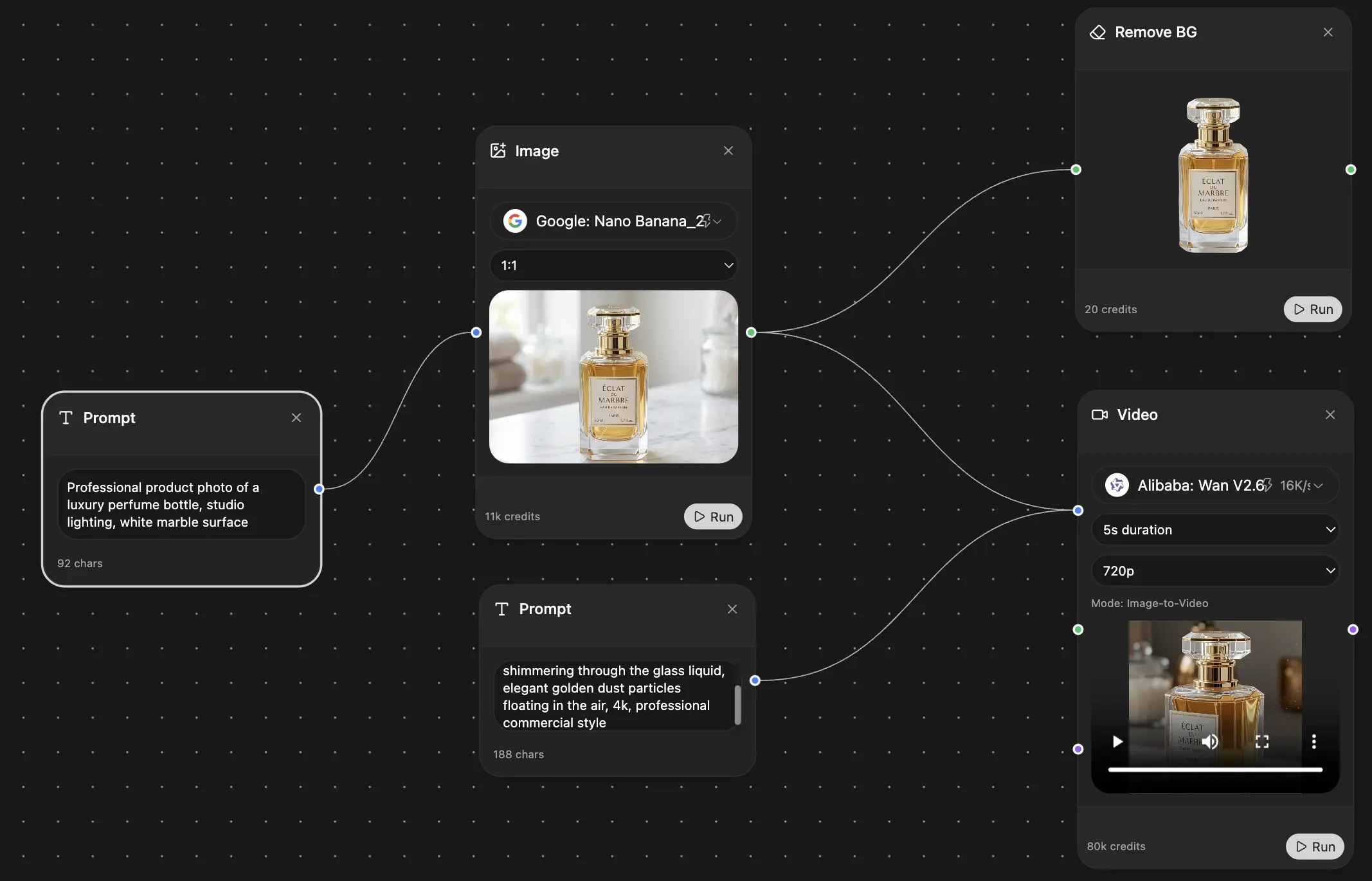
Your infinite AI canvas.
Chat, image, video & motion tools — side by side
Save hours of work and research
Transparent, High-Value Pricing
Trusted by teams at






Free
No credit card required
- 100 credits daily
- 3 AI models to try
- Basic AI chat
Plus
- 1,000,000 credits/month
- 25+ AI models — GPT, Claude, Gemini, Grok & more
- Agent Mode with web search, computer tools and more
- Creative Studio: image generation and video generation
- Project Library: chat with document, website and youtube, podcast generation, flashcards, reports and more
- Workflow Studio and FocusOS
Professional
- Everything in Plus, and:
- 2,100,000 credits/month
- Pro-exclusive models (Claude Opus, Grok 4, Sonar Pro)
- Motion Tools & Max Mode
- First access to latest features
- Access to additional offers
What Our Users Say
Great Tool after 2 months usage
simplyzubair
I love the way multiple tools they integrated in one platform. So far it is going in right dorection adding more tools.
Best in Kind!
barefootmedicine
This is another game-change. have used software that kind of offers similar features, but the quality of the data I'm getting back and the sheer speed of the responses is outstanding. I use this app ...
simply awesome
MarianZ
I just tried it - didnt wanna stay with it, because there is so much like that out there. But it convinced me, because: - the discord-channel is very response and fast - the number of models are quite...
A Surprisingly Comprehensive and Engaging Experience
bruno.battocletti
Zemith is not just another app; it's a surprisingly comprehensive platform that feels like a toolbox filled with unexpected delights. From the moment you launch it, you're greeted with a clean and int...
Great for Document Analysis
yerch82
Just works. Simple to use and great for working with documents and make summaries. Money well spend in my opinion.
Great AI site with lots of features and accessible llm's
sumore
what I find most useful in this site is the organization of the features. it's better that all the other site I have so far and even better than chatgpt themselves.
Excellent Tool
AlphaLeaf
Zemith claims to be an all-in-one platform, and after using it, I can confirm that it lives up to that claim. It not only has all the necessary functions, but the UI is also well-designed and very eas...
A well-rounded platform with solid LLMs, extra functionality
SlothMachine
Hey team Zemith! First off: I don't often write these reviews. I should do better, especially with tools that really put their heart and soul into their platform.
This is the best tool I've ever used. Updates are made almost daily, and the feedback process is very fast.
reu0691
This is the best AI tool I've used so far. Updates are made almost daily, and the feedback process is incredibly fast. Just looking at the changelogs, you can see how consistently the developers have ...