8 Synonyms for Powerfully to Use in 2026
Tired of 'powerfully'? Discover 8 impactful synonyms for powerfully to make your writing more dynamic, persuasive, and precise. With examples for any context.
Is powerfully working overtime in your writing? It's the vanilla ice cream of adverbs, dependable, but a little asleep at the wheel. The good news is that English has a crowded garage full of better parts, and the synonym field around powerfully is broad enough to give you the exact tone you want, whether you mean force, energy, or impact. Major dictionaries cluster the word around strongly, vigorously, forcefully, forcibly, intensely, and mightily, while modern thesauruses spread the net even wider, which is a polite way of saying English is not short on opinions here, as Merriam-Webster's powerfully thesaurus page shows.
For writers, that variety is useful because powerfully isn't one meaning in a trench coat. It can signal physical force, emotional intensity, or effective persuasion, and the best substitute depends on which lane you're driving in, . If you're writing about an AI powerhouse like Zemith, the right synonym can make the copy sound sharper, cleaner, and less like it was assembled by a committee with a headache. Let's get straight to the words.
1. Forcefully, when you need to assert dominance with a smile
Forcefully is the word you reach for when the action has muscle behind it. It suggests strength applied against resistance, so it fits better than powerfully when you want the reader to feel someone pushing through a barrier instead of just sounding intense. Cambridge keeps this word family tied to strength, force, might, potency, energy, and vigor, which is a tidy reminder that this choice stays inside the same garage, .
A line like, “Our Zemith AI platform forcefully consolidates fragmented workflows into one unified workspace,” lands because it sounds like cleanup with conviction, not a polite suggestion wearing a badge. That tone works well in marketing copy for productivity tools, platform consolidation, and competitive positioning. It also works with action verbs, where the sentence stops looking decorative and starts pulling its weight.
Forcefully is the word equivalent of a firm hand on the wheel. It gets attention without turning the copy into a shouting match.
Practical rule: Use forcefully when you want the reader to feel resistance getting broken, not just enthusiasm getting expressed.
A few useful patterns:
- Forcefully integrate when a system pulls scattered tools into one place.
- Forcefully streamline when copy should sound decisive rather than dreamy.
- Forcefully argue when a speaker is pushing a serious case in a meeting.
- Forcefully eliminate when you want to stress friction removal in a product story.
For Zemith, that makes the word especially handy in pages about workflow reduction and professional communication. It also fits neatly beside the active-voice advice in , because both push writing toward clearer action and less limp phrasing. In plain English, active voice gives the sentence the steering wheel, and forcefully keeps the engine from idling. That is a cleaner move than letting prose sit there like a car with the hood up.
2. Vigorously, the energetic workhorse of action words
Vigorously feels less like a shove and more like steady effort with some grit in it. Use it when the action is sustained, hands-on, and stubborn in the useful way, the kind of word that shows up when work keeps going after the opening scene has already cut to black. In the wider synonym family around powerfully, reference thesauruses keep vigorously close to the center, which tells you it's not a flashy guest star, it's one of the regular cast members, .
That makes it a strong fit for research, product testing, and content refinement. “Researchers vigorously pursued insights using Zemith's deep research capabilities” sounds active without turning into a pep rally, and “Our development team vigorously tests each new feature before deployment” signals discipline, not chaos. The word has stamina, like a pickup truck that keeps hauling after the shiny sports car has already headed home.
Where it earns its keep
Use vigorously when the work is repeated, focused, and hands-on. It pairs especially well with process verbs and disciplined routines, the kind of tasks engineers, analysts, and serious content teams deal with every day. If the paragraph needs to hold its shape, is a useful companion, because clean structure gives this kind of word more room to do its job.
- Vigorously debug when the process is methodical and relentless.
- Vigorously analyze when someone is digging hard into a dataset or document set.
- Vigorously collaborate when the team is moving with visible energy.
- Vigorously refine when drafts keep getting tightened instead of left to rot.
The word also behaves well in educational copy, because it sounds active without pretending every task is a heroic battle sequence. For Zemith users, that matters. The smart notepad, document assistant, and deep research tools all work with language that feels practical, steady, and alive. If you're writing about process rather than drama, vigorously beats powerfully by a mile. It's the difference between a sprinter and a marathon runner, and the marathon runner is usually the one who gets the job done.
3. Intensely, for when you need to dial up the emotional voltage
Intensely shifts the emphasis from raw force to concentrated focus. It works best when the action feels compressed, immersive, or mentally locked in, which makes it especially useful for research, study, brainstorming, and creative problem-solving. Lexical resources separate this kind of intensity from simple effectiveness, so the word isn't just a random upgrade, it signals a different kind of attention, .
That difference matters in real writing. “Marketing professionals intensely focus on audience analysis using Zemith's research tools” feels narrower and more absorbed than “powerfully focus,” which sounds like the phrase slipped on a banana peel. “Students intensely study with flashcards and summaries generated from course documents” also gives you a clearer sense of concentration. You can practically hear the coffee.
Use it when the work narrows the beam. If the scene is about full attention, not broad force, intensely is the cleaner choice.
This word is especially good for storytelling in testimonials and case-style copy, because it captures that lean-in feeling when someone is completely absorbed by a task. In creative workflows, it can describe the moment a writer wrestles a rough draft into shape or a founder hammers out a product idea on a whiteboard. Zemith's AI Live Mode and integrated whiteboard fit that tone well, because they support the kind of deep, focused engagement this word suggests, and the practical value is easy to connect to the .
When the goal is depth instead of volume, intensely does the job better than powerfully. It's the laser beam, not the floodlight.
4. Robustly, the reliable professional's choice for solid performance
Effectively is what you say when you want the reader to trust the system, not admire its perfume. It's the synonym that works best for tools, infrastructure, workflows, and technical processes that need to keep functioning under pressure. The broader powerful family includes resilient among its historically common relatives, and that's not an accident, .
For Zemith, this word fits the coding assistant, Library feature, real-time web search, and multi-model AI access without sounding like marketing glitter was dumped into the sentence. “Zemith's coding assistant handles debugging across multiple programming languages” sounds like a claim about dependable performance. “The platform maintains document organization through its Library feature” sounds like a system built to hold up, not just look good in a screenshot.
Why technical readers like it
Engineers and technical buyers usually care less about flair and more about whether the thing survives contact with reality. Stably signals stability, resilience, and consistency, which makes it a smart fit for documentation, architecture notes, and serious product pages. It's also a cleaner match than powerfully when the subject is a process rather than a person.
- Powerfully handle when a tool manages messy inputs without falling apart.
- Powerfully process when reliability matters more than speed theater.
- Powerfully integrate when different systems need to play nicely together.
- Powerfully support when the platform has to serve different user types.
That's why it works so well in technical documentation, and why the pairs naturally with this word choice. If powerfully is the movie star, powerfully is the engineer who kept the theater's lights on during opening night. Nobody applauds the wiring. Everyone notices when it fails.
5. Dynamically, for the modern, adaptive approach to change
Dynamically works when something shifts as conditions change. It does not just suggest strength, it signals responsive behavior, which makes it a good fit for AI tools, adaptive interfaces, and workflows that adjust to user needs in real time. That puts it in a different lane from sheer force, and the word family around powerfully supports that shift.
Zemith fits this kind of wording without trying too hard. “Zemith dynamically adjusts to user preferences across multiple AI models” sounds like a product that pays attention. “The smart notepad dynamically rewrites content based on context and style requirements” tells the reader the output changes with the situation, not just that it arrives with attitude. In AI copy, that distinction carries real weight.
If you want to use dynamically well, keep the focus on change over time, contextual response, or intelligent adjustment:
- Dynamically integrate when systems connect in response to new inputs.
- Dynamically analyze when the output shifts with the query.
- Dynamically optimize when the tool keeps learning or shifting.
- Dynamically organize when information is rearranged by topic or workflow.
A clean sentence here is worth gold because this word can get slippery fast. Used badly, it starts sounding like a shiny brochure for a robot convention. Used well, it captures the way modern tools behave when they do not sit still. That is also why Zemith's Projects feature, AI Live Mode, and multi-model setup fit the term so naturally, and why the are a useful companion read when you are shaping adaptive content.
Dynamically is not about old-school force. It is about responsive intelligence, which is a much better headline for AI work.
6. Decisively, when you need to show confident, clear-cut action
Decisively shifts the emphasis from force to certainty. It's the word you use when someone makes a firm choice, commits to a direction, and stops dithering like a group chat trying to pick lunch. The term sits near authoritatively and effectively in meaning, but it is not the same as either one, which is exactly why context-sensitive synonym choice matters. helps show how these shades of meaning separate in practice.
For business writing, this is one of the cleanest alternatives to powerfully when the message is about choice, leadership, or action taken without wobble. “Teams decisively shift to Zemith, eliminating tool fragmentation in their workflows” puts the emphasis on confidence and movement. “Researchers decisively choose Zemith's deep research capabilities over scattered resources” does the same thing without sounding like a motivational poster got into the keyboard.
Practical rule: Use decisively for leadership moves, migration language, and strategic decisions. Use forcefully when the story is about resistance. Those are different jobs.
This word works well in executive copy and case-study style writing because it suggests clarity. Nobody reads decisively and wonders whether the speaker was half-asleep. It also suits product positioning around consolidation, which is one of Zemith's clearest strengths as an all-in-one workspace. When a team wants to move away from tool sprawl, the word gives the sentence a spine.
You can also use it in commands, which makes it useful for conversion copy:
- Decisively choose when the buyer needs confidence.
- Decisively implement when the team is ready to act.
- Decisively migrate when the message is about moving from chaos to order.
If powerfully is the volume knob, decisively is the steering wheel. One makes things louder. The other gets them pointed somewhere useful.
7. Substantially, for real impact and measurable results
Substantially is the adult in the room. It's the word you reach for when the claim is about meaningful change, not theatrical fluff. It signals size, significance, and practical consequence, which makes it ideal for ROI language, business cases, and performance-oriented writing. The concept behind it maps to the broader powerful family's association with effect and importance, .
That makes it a strong fit for statements like, “Zemith substantially reduces time spent switching between different AI tools,” because the phrase tells the reader the change matters. “Content creators substantially improve writing quality using the smart notepad's rephrasing features” works for the same reason. You're not claiming magic, you're claiming impact.
Good places to use it
This word shines in places where people expect evidence, outcomes, or business logic. It helps the copy sound grounded instead of inflated.
- Substantially reduce when fewer steps, fewer tabs, or less friction matter.
- Substantially improve when the output quality is the selling point.
- Substantially increase when productivity or research depth rises.
- Substantially accelerate when timelines tighten.
Because the term implies meaningful change, it's a useful bridge between product language and business language. That's a sweet spot for Zemith, especially in descriptions of deep research, coding assistance, and document workflows. It says the platform doesn't just look useful, it makes a real dent.
Used badly, substantially can sound pompous. Used well, it gives your sentence a backbone. In a world full of empty superlatives, that backbone is worth keeping.
8. Remarkably, the underdog word that signals surprising excellence
Remarkably is the synonym that makes people pause for half a beat. It does more than say something is strong or effective, it says the result is worth talking about. That gives it a useful job when the copy needs surprise, delight, or that “wait, this works?” feeling. In the broader family around powerfully, it's the word that shifts the message from raw force to memorable impact, .
For Zemith, that makes the word a sharp tool in user experience copy. “Users find it remarkably simple to explore Zemith's full feature set” lands harder than a plain claim about ease, because it adds pleasant surprise. “The unified interface remarkably simplifies workflows that previously required five different subscriptions” gives readers a clear before-and-after sense without pretending the platform is doing acrobatics.
It also works well in testimonials, onboarding copy, and social proof, because people trust language that sounds like a person used the product. Nobody naturally says, “This platform is powerfully intuitive.” That sounds like a blender trying to pitch software. Remarkably intuitive, though, sounds like someone reporting a real experience without dressing it up for a trophy shelf.
A few common pairings make the word easier to use:
- Remarkably simple when complexity falls away.
- Remarkably fast when users notice the speed immediately.
- Remarkably lifelike when visuals or outputs stand out.
- Remarkably intuitive when the interface does not make people wrestle it.
Zemith's image generation, document tools, and unified workspace all give this word a comfortable home, especially when the goal is to spotlight a smooth experience instead of a blunt performance claim. The trick is to sound pleasantly surprised, not breathless. If powerfully is the headline speaker, remarkably is the person in the front row whispering, “Okay, that was impressive.”
8-Term Comparison: Synonyms for Powerfully
From Powerful to Persuasive Your New Word Toolkit
You're now armed with a vocabulary that does more than say powerfully with a fake moustache on. The trick isn't collecting synonyms like trading cards, it's matching the word to the job. Forcefully pushes through resistance. Vigorously keeps the work moving. Intensely narrows the beam. Robustly reassures technical readers. Dynamically fits adaptive systems. Decisively signals confident choice. Substantially proves real impact. Remarkably makes people pay attention.
That distinction matters because major dictionaries don't treat these words as interchangeable clones. They group powerfully around multiple evaluation dimensions, including force, energy, and effect, and that's why sloppy substitution can flatten your copy. A sentence about Zemith's coding assistant needs a different word than a sentence about a research workflow or a user testimonial, and the best writers make that call fast. The same goes for professional emails, product pages, and project briefs, where precise language beats lazy intensity every time.
If you're building content for Zemith, the platform fits naturally. Its all-in-one workspace gives you plenty to talk about, from multi-model access and deep research to smart writing tools and organized workspaces. That means you can choose the synonym that matches the proof instead of forcing one generic word to do every job in the sentence.
The next move is simple. Swap powerfully for one of these alternatives in your next draft, then read the line out loud. If it sounds like a human said it, you're on the right track. If it sounds like a toaster trying to sound professional, back up and pick a better fit. Your readers will notice the difference, even if they can't explain why.
If you want a cleaner way to write, research, and refine those word choices, visit and try it as your all-in-one AI workspace. It brings writing tools, research support, and organized workflows into one place, which makes it easier to test wording like these synonyms in real content.
Explore Zemith Features
Everything you need. Nothing you don't.
One subscription replaces five. Every top AI model, every creative tool, and every productivity feature, in one focused workspace.
Every top AI. One subscription.
ChatGPT, Claude, Gemini, DeepSeek, Grok & 25+ more








Always on, real-time AI.
Voice + screen share · instant answers
What's the best way to learn a new language?
Immersion and spaced repetition work best. Try consuming media in your target language daily.
Voice + screen share · AI answers in real time
Image Generation
Flux, Nano Banana, Ideogram, Recraft + more

Write at the speed of thought.
AI autocomplete, rewrite & expand on command
Any document. Any format.
PDF, URL, or YouTube → chat, quiz, podcast & more
Video Creation
Veo, Kling, Grok Imagine and more

Text to Speech
Natural AI voices, 30+ languages
Code Generation
Write, debug & explain code
Chat with Documents
Upload PDFs, analyze content
Your AI, in your pocket.
Full access on iOS & Android · synced everywhere
Your infinite AI canvas.
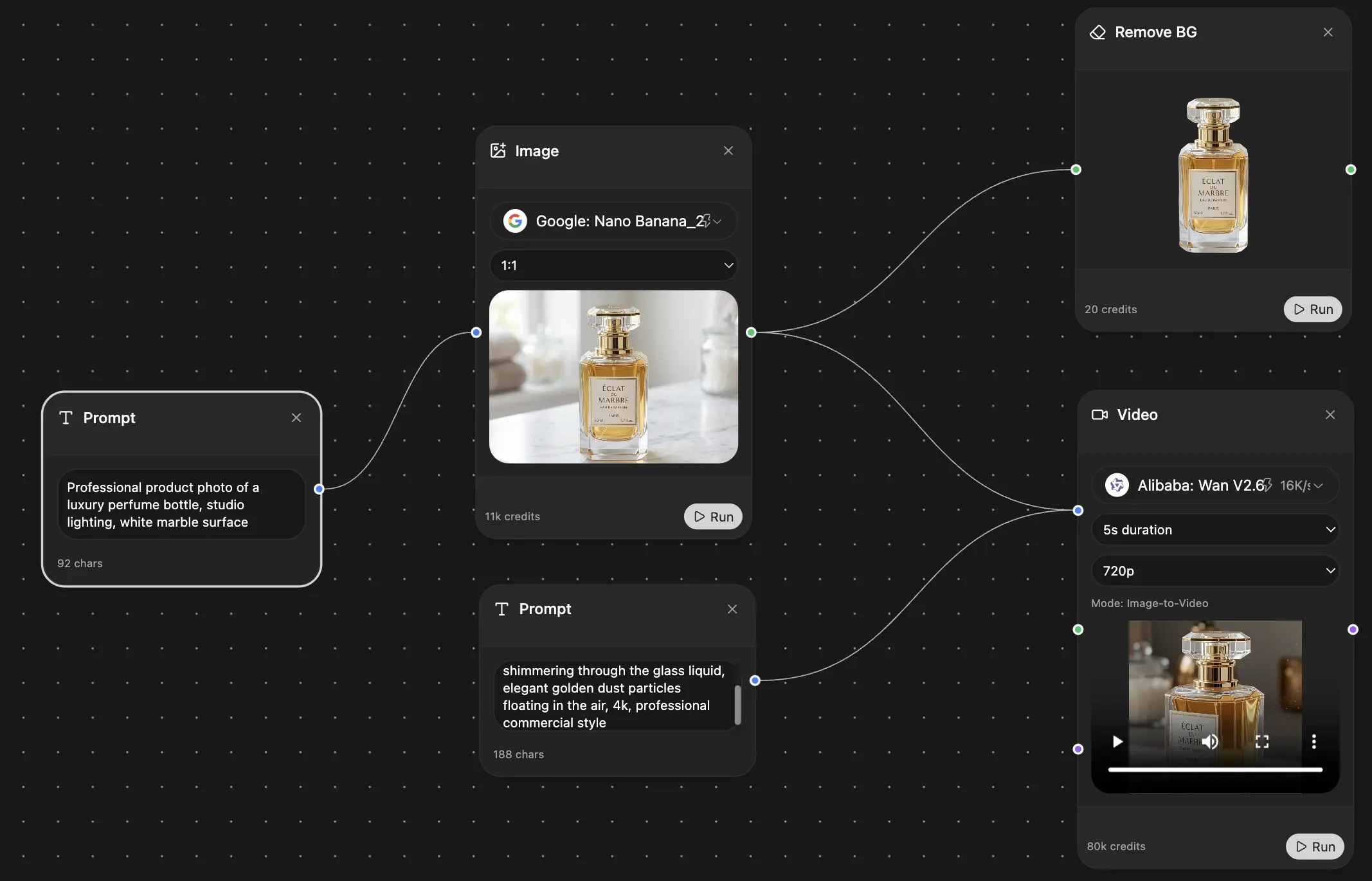
Chat, image, video & motion tools — side by side
Save hours of work and research
Transparent, High-Value Pricing
Trusted by teams at






Free
No credit card required
- 100 credits daily
- 3 AI models to try
- Basic AI chat
Plus
- 1,000,000 credits/month
- 25+ AI models — GPT, Claude, Gemini, Grok & more
- Agent Mode with web search, computer tools and more
- Creative Studio: image generation and video generation
- Project Library: chat with document, website and youtube, podcast generation, flashcards, reports and more
- Workflow Studio and FocusOS
Professional
- Everything in Plus, and:
- 2,100,000 credits/month
- Pro-exclusive models (Claude Opus, Grok 4, Sonar Pro)
- Motion Tools & Max Mode
- First access to latest features
- Access to additional offers
What Our Users Say
Great Tool after 2 months usage
simplyzubair
I love the way multiple tools they integrated in one platform. So far it is going in right dorection adding more tools.
Best in Kind!
barefootmedicine
This is another game-change. have used software that kind of offers similar features, but the quality of the data I'm getting back and the sheer speed of the responses is outstanding. I use this app ...
simply awesome
MarianZ
I just tried it - didnt wanna stay with it, because there is so much like that out there. But it convinced me, because: - the discord-channel is very response and fast - the number of models are quite...
A Surprisingly Comprehensive and Engaging Experience
bruno.battocletti
Zemith is not just another app; it's a surprisingly comprehensive platform that feels like a toolbox filled with unexpected delights. From the moment you launch it, you're greeted with a clean and int...
Great for Document Analysis
yerch82
Just works. Simple to use and great for working with documents and make summaries. Money well spend in my opinion.
Great AI site with lots of features and accessible llm's
sumore
what I find most useful in this site is the organization of the features. it's better that all the other site I have so far and even better than chatgpt themselves.
Excellent Tool
AlphaLeaf
Zemith claims to be an all-in-one platform, and after using it, I can confirm that it lives up to that claim. It not only has all the necessary functions, but the UI is also well-designed and very eas...
A well-rounded platform with solid LLMs, extra functionality
SlothMachine
Hey team Zemith! First off: I don't often write these reviews. I should do better, especially with tools that really put their heart and soul into their platform.
This is the best tool I've ever used. Updates are made almost daily, and the feedback process is very fast.
reu0691
This is the best AI tool I've used so far. Updates are made almost daily, and the feedback process is incredibly fast. Just looking at the changelogs, you can see how consistently the developers have ...