Multi-Model AI Platform: Why Your Team Needs One in 2026
Discover how a multi-model AI platform like Zemith consolidates top LLMs and creative tools into one workspace, cutting costs and boosting productivity.
You've got one tab for Claude, another for Gemini, a third for ChatGPT, and probably a fourth open for an image generator you forgot you were paying for. Your draft, research notes, PDFs, and code are scattered across separate conversations, while your company card collects another set of monthly AI charges.
This setup worked when AI tools were experimental. It gets painful when AI becomes part of every workday. A multi-model AI platform brings different models, documents, creative tools, research workflows, and project context into one workspace, so you can spend less time managing tools and more time finishing work.
The Subscription Juggling Act Nobody Signed Up For
A content writer starts a draft in one application, moves to another for a stronger rewrite, switches to a third to summarize a research paper, then opens an image tool for a hero graphic. A developer follows a similar routine, using one model for code generation, another for debugging, and a separate chat to explain an unfamiliar framework.
The work itself isn't always difficult. The friction comes from the handoffs. You copy context between windows, repeat instructions, search for the right login, and wonder whether the answer you received came from the model you intended to use. Somewhere in the process, the original task becomes an exercise in browser-tab archaeology.
Teams often underestimate the cost because each subscription looks manageable on its own. The bigger expense is operational. People lose context, duplicate prompts, maintain separate histories, and create disconnected knowledge silos. A useful overview of the trade-offs appears in , especially for anyone comparing separate plans with a consolidated workspace.
Why one tool per task stopped working
The AI market fragmented because different models developed different strengths. One may be better for careful writing, another for coding, another for image generation, and another for fast routine answers. Buying the strongest option for every task sounds sensible until the workflow becomes a small procurement department with a password manager.
The result is tool sprawl. Every application has its own interface, memory, upload limits, billing cycle, and privacy settings. Your team doesn't just manage AI outputs. It manages the spaces where those outputs are produced.
Practical rule: If people regularly copy the same project context between AI tools, the problem isn't model access anymore. It's workflow design.
A unified platform changes the starting point. Instead of asking which subscription to open, you work in one environment and choose the model or capability that fits the job. One login and one workspace won't solve every governance issue, but they can remove a large layer of needless switching.
How Multi-Model AI Platforms Actually Work
A multi-model AI platform sits between the user and several model providers. Think of it as a smart travel agent. You provide the destination and constraints, while the agent selects the route that best fits the journey. In AI, the “route” can depend on task type, response quality, latency, cost, data policy, or the model a user explicitly selects.

The four layers that matter
The interface layer gives people one place to chat, upload files, write, code, research, and create images. A consistent interface reduces the mental tax of learning several products.
The routing layer decides where a request should go. A simple implementation may route image prompts to an image model and code tasks to a coding-capable model. A more advanced router weighs quality, latency, and cost for each request. frames this as a measurable optimization problem, using token usage and throughput information to estimate response behavior rather than treating model selection as a permanent setting.
The evaluation layer checks whether routing decisions produce useful results. RouterEval illustrates the scale of this challenge with a framework covering 12 LLM evaluations, more than 8,500 LLMs, and more than 200,000,000 data records. Those figures are documented in the , and they underline why a single accuracy score isn't enough for real-world routing.
The workspace layer preserves context. Shared memory, project files, document libraries, and conversation history let the model work from the same source material instead of forcing you to reintroduce it every time.
This orchestration layer is also relevant to teams exploring , because model choice becomes part of the product and operating strategy, not merely a chat preference.
The practical difference is simple. An aggregator gives you a menu. An orchestration platform helps you use the menu intelligently. Zemith's explanation of a is useful context for understanding how text, images, documents, and other inputs can work together.
Why Enterprises Are Ditching Single-Model Strategies
A single model is easy to explain in a slide deck. It isn't always easy to operate in production. Research, customer support, code generation, document analysis, and image creation place different demands on an AI system, so teams increasingly build portfolios instead of betting everything on one provider.
The adoption data points in the same direction. A 2026 enterprise adoption snapshot found that 37% of enterprises were running five or more models in production, while 78% were using two or more LLM families. The share using three or more rose from 36% to 59% in three months during 2025, according to .
Three reasons the portfolio wins
Cost control is the obvious driver. Routine classification, summaries, formatting, and short drafts don't always need the most capable reasoning model. Sending every request to a premium model is like hiring a senior architect to rename files.
Risk reduction matters just as much. If one provider experiences an outage, changes availability, or no longer fits a compliance requirement, a second model can provide continuity. Multi-model architecture doesn't remove risk, but it avoids turning one vendor into a single point of failure.
Task specialization improves fit. A model that handles nuanced analysis well may not be the fastest option for high-volume text transformation. An image model and a coding model also solve different problems.
The operational catch is that multiple models create more governance work. Someone has to define approved models, evaluate outputs, monitor costs, document data handling, and decide when fallback routing is acceptable. That complexity is precisely why a unified platform has value.
A 2026 industry report found average model diversity per enterprise account reached 4.7 models in Q1 2026, compared with 2.1 in Q1 2025. It also reported that open-source and open-weight models accounted for 38% of enterprise token volume in Q1 2026, up from 11% a year earlier, as described in .
For a deeper comparison of the buying decision, use this as a starting point. The right question isn't “Which model wins?” It's “Which model should handle this work, under these constraints?”

Zemith Features That Replace Your Entire AI Stack
Zemith brings multiple models and work tools into one workspace. The practical benefit isn't just seeing several model names in a dropdown. It's being able to move from a research document to a polished draft, an image, or a code prototype without rebuilding the context each time.
Choose the model for the job
For demanding text work, Zemith provides access to Gemini-2.5 Pro, Claude 4 Sonnet, and GPT o3-mini. It also includes image models such as Flux 1.1 Pro Ultra, Stability Diffusion 3.5, and Google Imagen 3.
That gives a team room to create a sensible workflow. Use a stronger reasoning model for a complicated research question, a fast model for routine editing, and an image model when the task is visual. The point isn't to make everyone memorize model benchmarks. It's to keep model choice available without forcing people to maintain separate accounts.
Match tools to the workday
A researcher dealing with long PDFs can use the Document Assistant to chat with files, create summaries, generate quizzes and flashcards, or turn a document into a podcast. That workflow is more useful than a generic chat window because the source material stays attached to the task.
A writer can open Smart Notepad for autocomplete, rephrasing, style changes, custom paragraph generation, and conversion of bullet points into finished prose. The important detail is that the writer doesn't have to draft in one app and polish in another.
Developers get a Coding Assistant for code generation, debugging, explanations, and live previews for React components and HTML. Seeing a working preview beside the code shortens the loop between “I think this should work” and “I can inspect what it does.”
For heavier knowledge work, Deep Research supports web search, fact-checking, competitor analysis, and detailed investigations. Whiteboard supports collaborative brainstorming, while AI Live Mode allows hands-free audio conversations about what you're seeing or thinking through.
Keep the context organized
The Library organizes documents and chats with contextual memory across files. Projects gather conversations, materials, and shared knowledge around a topic, client, product, or course. That structure turns a collection of chats into an environment people can return to.
This is the distinction between adding another AI app and adopting an . A useful workspace should reduce handoffs, not just give you more buttons.
When to Use Frontier Models Versus Open-Source Alternatives
The most expensive model isn't automatically the right model. A good routing policy starts with the consequence of being wrong, the complexity of the task, the volume of requests, and the level of control your team needs.
Send a frontier model work that requires nuanced judgment, difficult reasoning, or careful synthesis. For example, legal document analysis, a complex market thesis, or a research question with several competing interpretations deserves more scrutiny than a routine internal email.
Open-source or open-weight models can make sense for standardized, repetitive work. Summarization, routine classification, simple transformations, and predictable question-answering tasks may not justify premium reasoning capacity. They can also appeal to teams that need greater control over deployment or data handling.
A practical routing test
Use these questions before assigning a workload:
- How costly is an error? High-stakes work usually deserves stronger review and a more capable model.
- How repetitive is the task? Stable, high-volume workflows are good candidates for efficient alternatives.
- Does the task require current or specialized reasoning? Complex research may need a frontier model, web access, or both.
- How sensitive is the information? Data-control requirements can outweigh raw model capability.
- Can a human review the result? A draft email and an external legal conclusion shouldn't follow the same policy.
For example, a team might use Claude 4 Sonnet for careful legal document analysis and GPT o3-mini for quick email drafts. The exact assignment should follow your own evaluation, but the principle is durable: route according to the work, not the brand.
Budget owners should also map model selection to usage patterns. A practical resource on can help teams think through recurring API exposure, even when they ultimately choose a managed platform.
Open-source adoption is moving into the enterprise mainstream. The previously cited industry reporting found open-source and open-weight models captured 38% of enterprise token volume in Q1 2026, compared with 11% a year earlier. Zemith's can help frame the decision around quality, speed, control, and cost rather than treating model selection as a popularity contest.
The Market Is Exploding and Here Is What That Means For You
The growth of AI platforms matters because it changes what buyers should expect from software. The multimodal AI market is estimated at $3.85 billion in 2026 and projected to reach $13.51 billion by 2031, with a 28.59% CAGR, according to .
Worldwide end-user spending on AI platforms and models is projected to reach $64 billion in 2026, up from $39 billion in 2025, a 63.4% year-over-year increase, according to . The same coverage projects AI application development platform spending to rise from $6.9 billion to $9.5 billion, while data science and machine learning platform spending is projected to rise from $19.4 billion to $26.4 billion.
The buyer's advantage
This spending shift pushes vendors to compete on integration, memory, workflow design, and usability, not just access to a famous model. For a content creator, developer, or researcher, that means the best product may be the one that removes the most friction from the entire process.
Consolidation also reduces a specific kind of lock-in. A single-vendor setup ties your workflow, prompts, history, and habits to one provider. A multi-model workspace can still become a dependency, so you should check export options, data policies, model availability, and administrative controls. But the architecture gives you more room to change models without changing the place where work happens.
A 2025 survey of 100 enterprise CIOs found 37% were using five or more AI models, up from 29% the year before, as reported by . That's a buying signal for consolidation, not a reason to collect more tabs.
Getting Started with Zemith Today
Start with one workflow, not your entire organization. Pick a task you repeat often and move it into a shared workspace so you can judge the reduction in switching, duplicated prompts, and scattered files.

Choose your first workflow
Content creators can begin in Smart Notepad. Try turning a rough outline into a polished article, then use the image tools to create supporting visuals. A practical test is converting a YouTube video into a blog post, followed by a fact-checking pass and an image prompt.
Developers should open the Coding Assistant and bring a small React or HTML task. Ask for an implementation, inspect the live preview, and then request an explanation of the parts you don't understand. That gives you a useful test without risking a production codebase.
Researchers and students can upload a PDF to the Document Assistant. Ask it for a summary, create a quiz, generate flashcards, and compare two documents inside the same project. The workflow reveals whether the platform handles the kind of source material you use.
Make the workspace useful to a team
Create a Project for a client, product, course, or research topic. Add the relevant documents and conversations, then define a simple rule for model choice. For example, your team might reserve a stronger reasoning model for final analysis while using a faster option for first drafts and routine transformations.
Try AI Live Mode while walking through a brainstorm, or use Whiteboard when several people need to shape an idea together. You don't need to migrate every existing tool on day one. Start with the workflow that currently causes the most context-switching.
An enterprise readiness survey of more than 500 senior technology professionals found 94% expected to run more than one model within two years, 67% expected more than one inference provider, and 70% said they weren't prepared to run LLM projects for enterprise solutions, according to . Those findings make a gradual start sensible. Test one project, document what works, review privacy and data controls, then expand with clear routing rules.
The fastest win usually comes from stopping the tab shuffle. Once your files, model choices, drafts, and project memory live together, you can spend your attention on the decision in front of you instead of remembering which subscription owns the conversation.
Zemith brings multiple AI models, document tools, writing support, research, image generation, coding assistance, and shared project workspaces into one place. Visit to test a workflow that currently makes you juggle subscriptions, and see how a multi-model AI platform can turn that scattered process into a single, practical workspace.
Explore Zemith Features
Everything you need. Nothing you don't.
One subscription replaces five. Every top AI model, every creative tool, and every productivity feature, in one focused workspace.
Every top AI. One subscription.
ChatGPT, Claude, Gemini, DeepSeek, Grok & 25+ more







Always on, real-time AI.
Voice + screen share · instant answers
What's the best way to learn a new language?
Immersion and spaced repetition work best. Try consuming media in your target language daily.
Voice + screen share · AI answers in real time
Image Generation
Flux, Nano Banana, Ideogram, Recraft + more

Write at the speed of thought.
AI autocomplete, rewrite & expand on command
Any document. Any format.
PDF, URL, or YouTube → chat, quiz, podcast & more
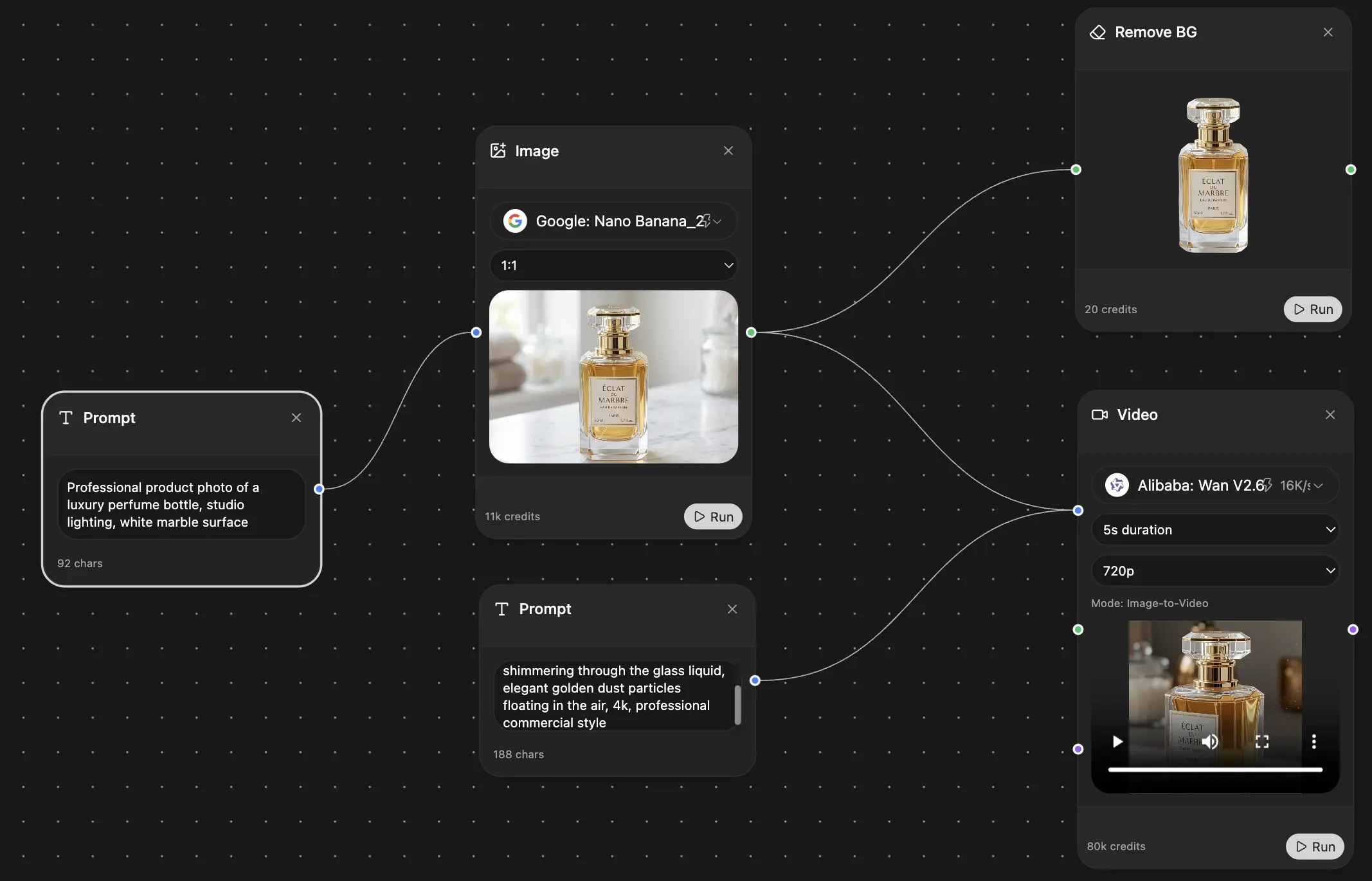
Video Creation
Veo, Kling, Grok Imagine and more

Text to Speech
Natural AI voices, 30+ languages
Code Generation
Write, debug & explain code
Chat with Documents
Upload PDFs, analyze content
Your AI, in your pocket.
Full access on iOS & Android · synced everywhere
Your infinite AI canvas.
Chat, image, video & motion tools — side by side
Save hours of work and research
Transparent, High-Value Pricing
Trusted by teams at






Free
No credit card required
- 100 credits daily
- 3 AI models to try
- Basic AI chat
Plus
- 1,000,000 credits/month
- 25+ AI models — GPT, Claude, Gemini, Grok & more
- Agent Mode with web search, computer tools and more
- Creative Studio: image generation and video generation
- Project Library: chat with document, website and youtube, podcast generation, flashcards, reports and more
- Workflow Studio and FocusOS
Professional
- Everything in Plus, and:
- 2,100,000 credits/month
- Pro-exclusive models (Claude Opus, Grok 4, Sonar Pro)
- Motion Tools & Max Mode
- First access to latest features
- Access to additional offers
What Our Users Say
Great Tool after 2 months usage
simplyzubair
I love the way multiple tools they integrated in one platform. So far it is going in right dorection adding more tools.
Best in Kind!
barefootmedicine
This is another game-change. have used software that kind of offers similar features, but the quality of the data I'm getting back and the sheer speed of the responses is outstanding. I use this app ...
simply awesome
MarianZ
I just tried it - didnt wanna stay with it, because there is so much like that out there. But it convinced me, because: - the discord-channel is very response and fast - the number of models are quite...
A Surprisingly Comprehensive and Engaging Experience
bruno.battocletti
Zemith is not just another app; it's a surprisingly comprehensive platform that feels like a toolbox filled with unexpected delights. From the moment you launch it, you're greeted with a clean and int...
Great for Document Analysis
yerch82
Just works. Simple to use and great for working with documents and make summaries. Money well spend in my opinion.
Great AI site with lots of features and accessible llm's
sumore
what I find most useful in this site is the organization of the features. it's better that all the other site I have so far and even better than chatgpt themselves.
Excellent Tool
AlphaLeaf
Zemith claims to be an all-in-one platform, and after using it, I can confirm that it lives up to that claim. It not only has all the necessary functions, but the UI is also well-designed and very eas...
A well-rounded platform with solid LLMs, extra functionality
SlothMachine
Hey team Zemith! First off: I don't often write these reviews. I should do better, especially with tools that really put their heart and soul into their platform.
This is the best tool I've ever used. Updates are made almost daily, and the feedback process is very fast.
reu0691
This is the best AI tool I've used so far. Updates are made almost daily, and the feedback process is incredibly fast. Just looking at the changelogs, you can see how consistently the developers have ...