How to Improve Concentration That Actually Sticks
Learn how to improve concentration with proven habits, focus techniques, and smart AI tools that help you get into deep work without burning out.
You don't need another pep talk about discipline. You need to stop treating focus like a personality trait you either have or don't have. You sit down to work, open one tab, then somehow end up comparing refrigerator wattage, rereading Slack, and wondering why your brain feels like a browser with 38 tabs and a broken fan.
That's the problem with how to improve concentration. It usually isn't a moral failure, it's a setup failure. When work is designed badly, your attention leaks out through the cracks, and then everyone blames “lack of willpower” like that fixes anything.
Why Your Focus Keeps Crashing Mid-Task
You know the scene. You open a document, tell yourself this'll be a clean 20-minute sprint, and then suddenly you're ten minutes deep into a random product comparison, your phone is face down but somehow still loud, and the task you meant to finish is now a vague emotional memory.
Harvard Health notes that attention can begin to wane within about 10 minutes after starting a task, which is exactly why “just try harder” is such lazy advice. Once you accept that concentration has a short fuse, the diagnosis gets clearer. The culprits are usually multitasking, anxiety, poor task sequencing, and sleep debt, not a broken character.

The leak is usually structural, not spiritual
When concentration collapses fast, I don't assume I need more grit. I assume the task was too big, too vague, or too exposed to interruption. That's why the first fix is to stop designing work like a buffet and start designing it like a lane.
Practical rule: if you keep “starting” the same task, the task is probably too loose. Shrink it, sequence it, and remove the open doors.
That's also why context switching hurts so much, which I've broken down more bluntly in . Your brain doesn't just lose time when it hops around. It loses momentum, and momentum is the part people forget to protect.
If focus keeps slipping by lunch, don't ask, “What's wrong with me?” Ask, “What's making this task easy to abandon?” That question is more useful, and a lot less dramatic.
Immediate Focus Techniques You Can Run Today
Start with a simple rule. Protect the block, then protect the brain. Harvard Health is clear that concentration holds up better when the brain isn't repeatedly interrupted, so your job is to reduce switching and give work a shape it can survive in.
The easiest place to begin is the 25-minute work, 5-minute break rhythm from the Pomodoro method, because it gives your attention a fence. Timeboxing does the same thing with a harder edge. You decide what happens in the block, and you stop when the block ends, even if your inner overachiever wants to “just keep going” and ruin the next hour.
If you want a study-friendly timer with a clean interface, the is a decent example of how simple the setup should feel. No circus. No digital confetti. Just a clock and a task.
Use a one-minute precommitment before every block
Write down one outcome before you start. Not five. One. If the next 25 minutes don't produce that one thing, the block wasn't clear enough.
Set one target, mute the rest, start the timer, finish when it ends.
That tiny precommitment matters because it cuts the mental friction that makes people stall for ten minutes deciding where to begin. I've seen more focus lost to “opening ritual chaos” than to the actual work.
A decent block looks like this, and yes, it's boring because boring works:
- Name the outcome: “Draft section one,” not “work on article.”
- Close the side doors: email, chat, and random tabs stay shut.
- Start the 25-minute timer: don't negotiate with it mid-block.
- Take the 5-minute break seriously: stand up, breathe, move, then come back.
If you use an AI workspace like Zemith, this gets easier because the work can stay inside one surface instead of bouncing between a timer app, a draft, a chat, and a notes app. That matters. The less you juggle, the less you leak attention. I'd also point you to if you want more ways to reduce friction without turning your desk into a productivity shrine.
Sleep, Movement, and the Body Behind the Brain
A clean timer cannot rescue a tired nervous system. That's the part people hate hearing because it feels less exciting than a new app, but it's the constraint. The U.S. LTCFeds Care Navigator recommends 150 minutes of moderate-intensity aerobic exercise per week and 7 to 9 hours of sleep nightly to support concentration and focus, and Harvard Health also points to a 10-minute walk as a quick concentration boost.

Sleep problems show up in focus fast. So does too much sitting. If your body has been stuck in one chair for hours, your brain starts pushing back.
The basic checklist is plain and effective. Keep sleep steady, keep movement in the week, and stop waiting until you feel wrecked before you stand up.
- Sleep: protect 7 to 9 hours and keep the schedule consistent.
- Movement: hit the weekly 150-minute target in whatever sane way you can.
- Reset walks: use a 10-minute walk when attention starts to blur.
- Hydration: drink water before you decide you're “just unfocused.”
- Mobility breaks: stand up between blocks instead of becoming part of the chair.
If you want the why behind that, read . Sleep is not optional input. It changes how well you plan, hold attention, and recover after a mental push.
Movement matters for the same reason. It keeps the system from going stale, and it gives your brain a clean break when a task has gone foggy. If you're studying or writing and care about both attention and recall, keep in the same workflow, because memory and focus break down together when the body is running on fumes.
A perfect focus routine on 5 hours of sleep still loses. Build the body first, then expect the brain to do good work.
Designing a Workspace That Protects Your Attention
Your environment is already making decisions for you. Every visible notification, every open tab, every phone buzz, every half-finished draft is suggesting that switching would be easier than staying put.
That's why workspace design beats motivation almost every time. Clear the desk. Hide the phone. Batch notifications. Close the browser tabs you're “keeping for later,” which is a lie we all tell ourselves while pretending we'll come back to them. If you work in a coworking space, are worth skimming because open environments need stricter boundaries, not softer intentions.
Consolidate the surfaces where your work lives
The biggest mistake is spreading one project across too many places. One note here, one chat there, one draft in a doc, one task in another app, one random idea in a tab you'll “obviously remember.” You won't. None of us do.
Zemith's workspace approach fits here because it keeps a draft, supporting notes, and project context in one place. A Smart Notepad lets you keep writing without jumping across tools, Projects centralize what belongs to the same topic, and the Library keeps related documents and chats tied together so you aren't hunting for your own thoughts like a raccoon in a junk drawer.
If you want a stronger mental model for that kind of setup, the practical angle is covered in . The point isn't fancy software. The point is fewer exits from the task.
One task, one surface, one less excuse to drift.
That's the standard. Not perfection, just fewer ways for your attention to get mugged.
Mindfulness, Single-Tasking, and Taming the Inner Chatter
A clean desk and decent sleep do not stop your mind from wandering. The problem is usually the noise inside the task, unfinished conversations, unpaid bills, awkward emails, and the dumb thing you said years ago that still shows up uninvited.
Kansas State University's worry time approach works because it gives intrusive thoughts a place to land instead of letting them hijack every minute. Set one fixed daily window, park the worries there, and move back to the task when they show up early. Trying to “ignore” your own brain is a waste of energy, and it usually fails fast.
Mindfulness helps only when it is simple enough to use mid-work.
- Notice the thought without making a scene.
- Label it for later. “Not now, worry time.”
- Take a brief breathing pause. Three slow breaths is enough.
- Return to the single task.
That rhythm is boring, and that is the point. Your concentration gets better when every mental interruption stops getting treated like an emergency.
A messy draft needs a place to catch stray thoughts. A Smart Notepad gives you somewhere to dump half-formed ideas without losing the thread, and a Document Assistant can pull a rough document back into shape after you have been dodging it for too long. That is not magic. It is external memory, and busy minds use it because they need it.
Single-tasking matters because it removes the fight over what deserves attention first. Reading, writing, and planning go better when the task surface stays narrow, the next action stays visible, and your brain does not have to hold six open loops at once. Projects and the Library help keep related material together, so you are not bouncing between notes, drafts, and context like a person searching for keys in the dark. Accuracy improves too, because less context switching means fewer sloppy mistakes and less mental residue hanging around after you stop working.
Zemith helps by making that setup easier to keep in place. It keeps the draft, supporting notes, and project context together, which gives your attention fewer places to leak out. That matters more than a motivational speech ever will.
Measuring Focus So Progress Is Real
If your attention keeps slipping, guesswork will lie to you. Track it instead, or you will keep mistaking random good hours for real progress.
Kansas State University's old-school 3 x 5 card trick still works because it exposes drift in plain sight. Split the card into morning, afternoon, and evening, then tally every time your mind leaves the task. You get a clean record of when attention starts leaking, not the polished story you tell yourself later.
Measure the right signals
Keep the system lean. Measure what shows whether your setup is helping.
- Completed focus blocks: count the blocks you finished.
- Minutes to first deep-work state: notice how long it takes to settle.
- Context switches per day: watch how often you jump surfaces.
- End-of-block rating: give the block a quick focus score.
- Weekly review notes: write what helped and what blew up.
A simple review works better than a bloated dashboard. If you use Zemith Projects for your weekly review, you can summarize what shipped, then connect it to the conditions that produced it. That is the part people skip. They log activity and call it a system, but they never tie effort to output.
For material that needs reinforcement over time, gives you a cleaner way to see whether recall is getting easier or still brittle.
Measure the pattern, not the mood.
That is the only way to tell whether your changes are working. Otherwise, you keep calling random good days progress and random bad days failure, and that is a bad way to run your attention.
Your 7-Day Concentration Starter Plan
Don't try to fix your whole life in one afternoon. That's how people end up buying three timers, a standing desk they hate, and a meditation app they never open.

Use this ramp-up exactly as written
Day 1, setup day. Clear your desk, install one focus workspace, and close the tab junk drawer.
Likely failure mode, you keep “organizing” instead of starting.
Day 2, first block. Run one 25-minute Pomodoro session with one outcome only.
Likely failure mode, you pick a task that's too vague and wander anyway.
Day 3, body check. Protect sleep, take a 10-minute walk, and drink water before work.
Likely failure mode, you skip the walk because “today is weird.” Today is always weird.
Day 4, worry time. Set one fixed window for intrusive thoughts and use it when distractions hit.
Likely failure mode, you try to solve every anxious thought in real time.
Day 5, tally day. Track every mind-wander in the morning, afternoon, and evening.
Likely failure mode, you forget to log the boring moments, which are the point.
Day 6, review day. Use a document summary tool to review what you shipped and what derailed you.
Likely failure mode, you review feelings instead of patterns.
Day 7, audit day. Keep the habits that worked and cut the ones that only looked smart.
Likely failure mode, you declare the plan dead because it wasn't perfect on the first pass.
If you want the study side of this system to stick, I'd also look at because concentration gets easier when the work is organized instead of endlessly re-decided.
The win is not “better focus” as a vibe. It's a system that makes focus the default more often than not, so you stop restarting your brain every morning like a broken lawn mower.
If you want a workspace that helps you stay on task, pulls drafting, document support, project context, and focus tools into one place so you're not bouncing between five apps to do one job. Try it when you're done arguing with your tabs, and build your next focus block around a system instead of a mood.
Explore Zemith Features
Everything you need. Nothing you don't.
One subscription replaces five. Every top AI model, every creative tool, and every productivity feature, in one focused workspace.
Every top AI. One subscription.
ChatGPT, Claude, Gemini, DeepSeek, Grok & 25+ more







Always on, real-time AI.
Voice + screen share · instant answers
What's the best way to learn a new language?
Immersion and spaced repetition work best. Try consuming media in your target language daily.
Voice + screen share · AI answers in real time
Image Generation
Flux, Nano Banana, Ideogram, Recraft + more

Write at the speed of thought.
AI autocomplete, rewrite & expand on command
Any document. Any format.
PDF, URL, or YouTube → chat, quiz, podcast & more
Video Creation
Veo, Kling, Grok Imagine and more

Text to Speech
Natural AI voices, 30+ languages
Code Generation
Write, debug & explain code
Chat with Documents
Upload PDFs, analyze content
Your AI, in your pocket.
Full access on iOS & Android · synced everywhere
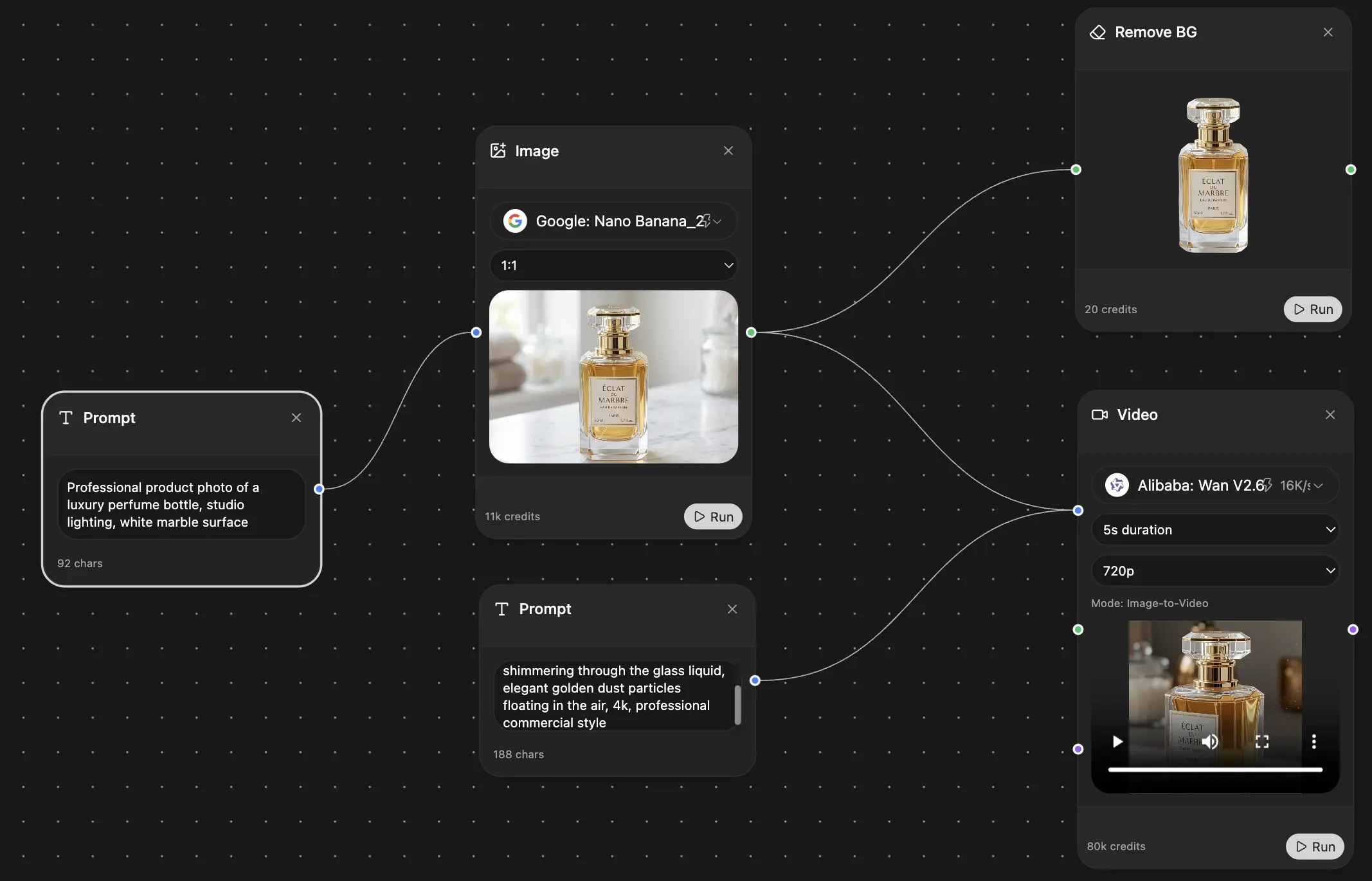
Your infinite AI canvas.
Chat, image, video & motion tools — side by side
Save hours of work and research
Transparent, High-Value Pricing
Trusted by teams at






Free
No credit card required
- 100 credits daily
- 3 AI models to try
- Basic AI chat
Plus
- 1,000,000 credits/month
- 25+ AI models — GPT, Claude, Gemini, Grok & more
- Agent Mode with web search, computer tools and more
- Creative Studio: image generation and video generation
- Project Library: chat with document, website and youtube, podcast generation, flashcards, reports and more
- Workflow Studio and FocusOS
Professional
- Everything in Plus, and:
- 2,100,000 credits/month
- Pro-exclusive models (Claude Opus, Grok 4, Sonar Pro)
- Motion Tools & Max Mode
- First access to latest features
- Access to additional offers
What Our Users Say
Great Tool after 2 months usage
simplyzubair
I love the way multiple tools they integrated in one platform. So far it is going in right dorection adding more tools.
Best in Kind!
barefootmedicine
This is another game-change. have used software that kind of offers similar features, but the quality of the data I'm getting back and the sheer speed of the responses is outstanding. I use this app ...
simply awesome
MarianZ
I just tried it - didnt wanna stay with it, because there is so much like that out there. But it convinced me, because: - the discord-channel is very response and fast - the number of models are quite...
A Surprisingly Comprehensive and Engaging Experience
bruno.battocletti
Zemith is not just another app; it's a surprisingly comprehensive platform that feels like a toolbox filled with unexpected delights. From the moment you launch it, you're greeted with a clean and int...
Great for Document Analysis
yerch82
Just works. Simple to use and great for working with documents and make summaries. Money well spend in my opinion.
Great AI site with lots of features and accessible llm's
sumore
what I find most useful in this site is the organization of the features. it's better that all the other site I have so far and even better than chatgpt themselves.
Excellent Tool
AlphaLeaf
Zemith claims to be an all-in-one platform, and after using it, I can confirm that it lives up to that claim. It not only has all the necessary functions, but the UI is also well-designed and very eas...
A well-rounded platform with solid LLMs, extra functionality
SlothMachine
Hey team Zemith! First off: I don't often write these reviews. I should do better, especially with tools that really put their heart and soul into their platform.
This is the best tool I've ever used. Updates are made almost daily, and the feedback process is very fast.
reu0691
This is the best AI tool I've used so far. Updates are made almost daily, and the feedback process is incredibly fast. Just looking at the changelogs, you can see how consistently the developers have ...