Explainer Video Production Company: A Smart Buyer's Guide
Choosing an explainer video production company? Learn what they do, real pricing ranges, timelines, and smart questions to ask before you sign anything.
You're probably staring at three explainer video quotes that all swear they're selling the same thing, and one of them looks like a typo. That's the trap. An explainer video production company isn't just selling animation, it's selling a stack of decisions hidden inside a quote, and if you don't know where the numbers come from, you'll compare vendors like they're all ordering from the same menu.
The annoying part is that the cheapest quote can be the most expensive mistake. A video that looks “done” but misses the message, rights, or revision scope costs you twice, once in production and again when your team has to fix it with another round of work. Buyers who treat this like a procurement problem, not a beauty contest, end up with better videos and fewer awkward calls about “small changes.”
Table of Contents
[blocked]
The Quote That Made You Question Everything
A marketing lead sends out three RFPs for a 60-second explainer and gets back quotes that look like they came from different planets. One comes in around $3,800, another at $11,500, and the third at $24,000. All three say they can deliver a “custom explainer video,” which is agency language for “please don't inspect the plumbing.”
That spread isn't magic, and it isn't pure markup either. It usually means the vendors are making different assumptions about animation style, custom versus template work, voice talent, revision rounds, and the seniority of the creative team. One quote may cover a thin production pass built on pre-made assets, while another bakes in strategy, script refinement, custom illustration, and more time from senior creatives.
[blocked]
What the gap usually hides
The biggest mistake buyers make is treating every quote as if the deliverable is identical. It isn't. A studio can price a project low by stripping out discovery, limiting revisions, using a junior team, or assuming the client will supply a nearly finished script.
Practical rule: If a vendor can't break the quote into phases and ownership points, they're asking you to trust the smoke machine.
That's why the goal isn't to chase the lowest number. It's to understand what the number includes, what it excludes, and where the revision choke points live. A cheap quote with unclear ownership is how “simple videos” turn into budget archaeology.
The smarter move is to compare proposals like procurement documents, not mood boards. Ask what's fixed, what's variable, and what happens if the script changes after the storyboard is approved. That's where the true cost lives, not in the shiny final render.
[blocked]
What an Explainer Video Production Company Delivers

A serious studio does not just “make a video.” It runs a pipeline, and each step locks in choices that affect budget, timing, and how much freedom you still have to change direction. The production guide in the brief gets this right, because explainer work moves in stages, script first, visuals second, polish last.
[blocked]
The deliverables that matter
The first deliverable is discovery and messaging strategy. That is where the studio figures out who the video is for, what problem it solves, and what message needs to stick. Then comes the script, which should carry the hook, the narrative arc, and the call to action, instead of stacking product features like a rushed feature list.
After that, expect storyboards and often animatics. These are the visual contract between you and the studio, and weak boards usually mean expensive animation that proves the boards were weak. Style frames come next, where color, character design, and art direction get locked before the build starts.
From there, the team produces illustrations and assets, then handles animation, voice casting and recording, sound design, music licensing, and the final mix. Good vendors also plan the handoff, including delivery formats, source files, editable project files, and usage rights. Bad vendors leave those details vague, then act surprised when clients need files they thought they already owned.
[blocked]
Where scope creep usually hides
Scope creep shows up fastest in script refinement, storyboard revisions, and late brand changes. Those are the budget leaks. A proposal that says “full-service” but never defines the handoff is usually hiding a lot of follow-up work.
Compare vendors by deliverable, not by promise. A good proposal tells you what gets approved at each gate, what file types you will receive, and who owns what when the project wraps. That is the difference between a smooth launch and a slow dispute over assets.
[blocked]
Real Pricing Ranges and Where the Money Goes
Pricing for explainer work is all over the map because the work itself isn't one thing. A template-led video, a custom 2D animation, and a cinematic 3D piece do not belong in the same pricing conversation, even if the salesperson uses the same cheerful tone for all three. A professional 60-second explainer video commonly lands in the $5,000 to $15,000 range for custom 2D work, while template-based options start around $1,500 and premium 3D or mixed-media productions can exceed $25,000 .
The reason the price jumps isn't just “better visuals.” It's the amount of unique illustrated scenes, custom character rigging, lip-sync, licensed versus original music, professional voiceover, and revision handling baked into the build. Another pricing analysis says production consumes 60% to 70% of the total budget, while pre-production usually takes 15% to 20% and post-production 10% to 15% . That's the invisible part buyers miss when they compare quote totals.
[blocked]
Explainer Video Pricing Tiers Compared
The cheap tier rarely includes original concepting or full usage rights. The expensive tier doesn't just buy fancier pixels, it buys strategic input, fewer surprises, and a team that can say no when the brief gets bloated. If you want a current pricing anchor before you brief vendors, Zemith keeps a live pricing page at .
My blunt advice: Stop asking, “What does a 60-second explainer cost?” Ask, “What is the scope of the first round, and what happens when we change the script after approval?”
One more thing, don't compare a custom 2D quote to a template-led one like they're cousins. They're not. They're different products wearing the same name tag.
[blocked]
Production Timelines You Can Plan Around
Timelines expose a studio's honesty fast. A polished explainer in a hurry usually means the hard thinking got squeezed out. If someone promises a clean 60 to 90 second piece in under three weeks, expect shortcuts in story development, revision rounds, or both. Sometimes the animation is handled by a team you never meet.

The independent production guide in the brief gives a useful reality check. It says a screen-recording walkthrough can take 2 to 4 weeks, simple 2D animation often runs 6 to 8 weeks, and premium animation with character design can stretch to 8 to 12 weeks . That lines up with how this work behaves far better than the fake certainty of “we can knock it out fast.”
[blocked]
What a sane schedule looks like
For a standard project, plan in phases, not one deadline.
- Discovery and strategy, where the brief gets clarified and the message gets pinned down.
- Scripting and feedback, where the story gets written, cut down, and approved.
- Storyboarding and approval, where you catch expensive mistakes before they move.
- Design and illustration, where the look is built.
- Animation and production, where the work finally starts to feel visible.
- Sound design and final mix, where pacing, clarity, and polish get tuned.
If a studio says everything is “already in motion” before the script is approved, they are not efficient. They are eager to invoice you sooner.
[blocked]
What causes delays
Delays usually come from the buyer side, not because the studio forgot how to animate. The usual suspects are missing stakeholder sign-off, mid-process script rewrites, and last-minute brand guideline updates. That is why the brief matters so much. Every extra decision made after storyboard approval ripples into the rest of the schedule.
Ask one direct question: “Which milestone depends on our approval, and what happens to the timeline if we change it?” If the answer stays vague, the timeline is fiction with a spreadsheet attached.
For teams trying to capture the spoken version of a script fast, can move raw notes into something a writer can shape. It does not replace the production timeline, but it can shorten the ugly early part where ideas are still half-baked and nobody wants to type them out twice.
[blocked]
How Knowlify Can Help

Knowlify sits in the middle ground between a traditional studio and a faster AI workflow. It turns documents, URLs, and rough ideas into narrated, animated videos, and it offers both a self-serve platform and for done-for-you work. That matters if your team needs explainer content without building the entire production machine in-house.
[blocked]
Where it fits
The platform side is built for teams that want speed, brand control, and repeatability. Its feature set includes AI script generation, document, URL, and video-to-video conversion, 140+ natural voices, voice cloning, brand kits, custom characters, realistic avatars, translation and re-voicing in 30+ languages, quizzes, clickable calls to action, MP4 export, social-ready cuts, SCORM packaging, LMS integrations, team collaboration, API access, and priority rendering. The studio side handles scripting, storyboards, and animation end to end, with turnaround in as little as 72 hours, according to the product brief.
That mix solves a real problem. Many teams don't need one cinematic flagship video, they need a system for making training, onboarding, and explainer content without dragging every project through a six-week committee ritual. Knowlify is most relevant when the job is communication at scale, not a single prestige launch.
If you're comparing options, use it as a reference point rather than a default answer. Traditional studios still make sense for high-stakes brand pieces, freelancers can work for narrow jobs, and AI-assisted workflows make sense when speed and volume matter more than handcrafted motion. The right choice depends on how visible the asset is and what happens if it misses.
[blocked]
Production Company vs Freelancers vs AI-Assisted Workflows
Buyers need to get honest about risk. A dedicated production company, a freelance team, and an AI-assisted workflow can all make an explainer, but they do not transfer the same amount of responsibility or produce the same level of control. Choosing the wrong one usually means paying either in cash, coordination, or cleanup.
[blocked]
Explainer Video Production Options Compared
Dedicated agencies are the right call when brand stakes are high and you need one throat to choke if the project goes sideways. Freelancers win on price and flexibility, but they push project management risk back onto you. AI-assisted workflows, including research and scripting tools like , can compress pre-production and keep content moving, but they don't replace animation craft.
The decision rule is simple. If the video is public-facing, tied to revenue, or part of a major launch, use the option with the cleanest accountability. If the asset is internal, repeatable, or likely to change often, speed and iteration matter more than bespoke polish.
Decision rule: Match the workflow to the consequence of failure. The more visible the asset, the more you should pay for control.
That's the part agency decks usually skip. They sell outcomes, not trade-offs. You need both.
[blocked]
Questions That Separate Real Partners From Smooth Sales Pitches
The portfolio matters, but the questions matter more. A shiny reel can hide a weak process, while a plain proposal can belong to a team that knows how to ship. If you want to spot a real partner, force the conversation into the places polished decks avoid.

[blocked]
The four buckets that expose the gaps
Scoping and pricing transparency should come first. Ask for a detailed line-item cost, how change orders are handled, and what's excluded from the initial price. If the vendor can't explain where the budget goes, they're not being strategic. They're being slippery.
Creative process and revision limits are the next trapdoor. Ask how many revision rounds are bundled, who animates the project, and what happens if the script changes after storyboard approval. You also want to know whether the studio will subcontract without disclosure, because surprises are cute in birthday parties, not in production pipelines.
IP and licensing rights need plain-language answers. Ask who owns the source files, whether voiceover rights are perpetual, and what happens to unused storyboards or abandoned concepts. Music licensing windows matter too. A video that expires legally faster than the landing page it lives on is a bad purchase.
Post-delivery ownership is the part that gets ignored until someone needs an edit. Ask what file formats you'll receive, whether archival copies are stored, and whether future cut-downs are included. If the answer sounds like “we'll help where we can,” keep your hand on your wallet.
The whole point is to turn the conversation into a procurement filter, not a trust exercise. Good vendors welcome hard questions because they already know the answers. Weak vendors hope you'll be charmed before you start asking.
[blocked]
How Length and Recall Should Shape Your Brief
Length is a procurement decision. Put the cap in the brief before anyone writes script. That choice changes the story arc, the proof points, and the placement plan. If the team ignores attention span, they are writing for themselves, not for viewers.
The brief should also reflect recall. Breadnbeyond's explainer length case study shows a drop in viewing from 77% to 57% as videos move to 2 minutes . Wistia's video retention analysis also shows a clear pattern, retention stays above 70% for videos under 60 seconds, falls to roughly 50% at 2 minutes, and drops below 35% by 5 minutes. Use that evidence to control the script, not to excuse a longer cut after the fact.
[blocked]
Length vs recall and best use
The platform matters just as much as the runtime. LinkedIn often autoplays muted, so the first frames need to carry the message without audio. YouTube usually assumes sound-on viewing, which gives narration more room. In-app onboarding is different again, because the user is already inside the product and needs clarity more than polish.
If the brief does not name the target length and the recall goal, it is not a brief. It is a guess with a logo on it. A tool like can help teams reverse-engineer visual references during research, but the brief still has to define the outcome before anyone starts creating.
[blocked]
Your Pre-Sign Checklist and the Smarter Way Forward

Print this, tick it off, and do not sign until every box has an answer.
- Source files are yours. The contract should say who owns them.
- Revision rounds are capped. You need the number in writing.
- Storyboard approval comes first. No full production before sign-off.
- Music and voiceover rights are clear. Ask how long the licenses last.
- Kill fee terms are explicit. If the project stops, you should know the cost.
- Subcontractors are disclosed. No mystery teams.
- AI tool use is disclosed. If they use it, they should say so.
- Delivery formats are specified. Do not assume the export you need will appear on its own.
- Characters and templates can be reused, or cannot. Get the answer before launch.
- Archival and backup policy is defined. You do not want to rebuild the file tree later.
A better workflow is already clear. Use AI for research, competitive teardown, and script drafting, then hand the production to the team that can animate with care. If you want the drafting and review side organized before a studio takes over, can help structure that homework.
The blunt takeaway is this. An explainer video is a measurable asset, not a vanity piece, and the spend only earns its keep when the brief, rights, timeline, and scope are nailed down before the first frame is animated. If you are hiring now, use the checklist, ask the hard questions, and compare vendors like a buyer who plans to own the outcome, not just approve the final colors.
If you are ready to hire, send the checklist to the next vendor and ask for a line-item quote, a revision policy, and a rights summary in the same reply. If they dodge any of it, keep looking.
Explore Zemith Features
Everything you need. Nothing you don't.
One subscription replaces five. Every top AI model, every creative tool, and every productivity feature, in one focused workspace.
Every top AI. One subscription.
ChatGPT, Claude, Gemini, DeepSeek, Grok & 25+ more







Always on, real-time AI.
Voice + screen share · instant answers
What's the best way to learn a new language?
Immersion and spaced repetition work best. Try consuming media in your target language daily.
Voice + screen share · AI answers in real time
Image Generation
Flux, Nano Banana, Ideogram, Recraft + more

Write at the speed of thought.
AI autocomplete, rewrite & expand on command
Any document. Any format.
PDF, URL, or YouTube → chat, quiz, podcast & more
Video Creation
Veo, Kling, Grok Imagine and more

Text to Speech
Natural AI voices, 30+ languages
Code Generation
Write, debug & explain code
Chat with Documents
Upload PDFs, analyze content
Your AI, in your pocket.
Full access on iOS & Android · synced everywhere
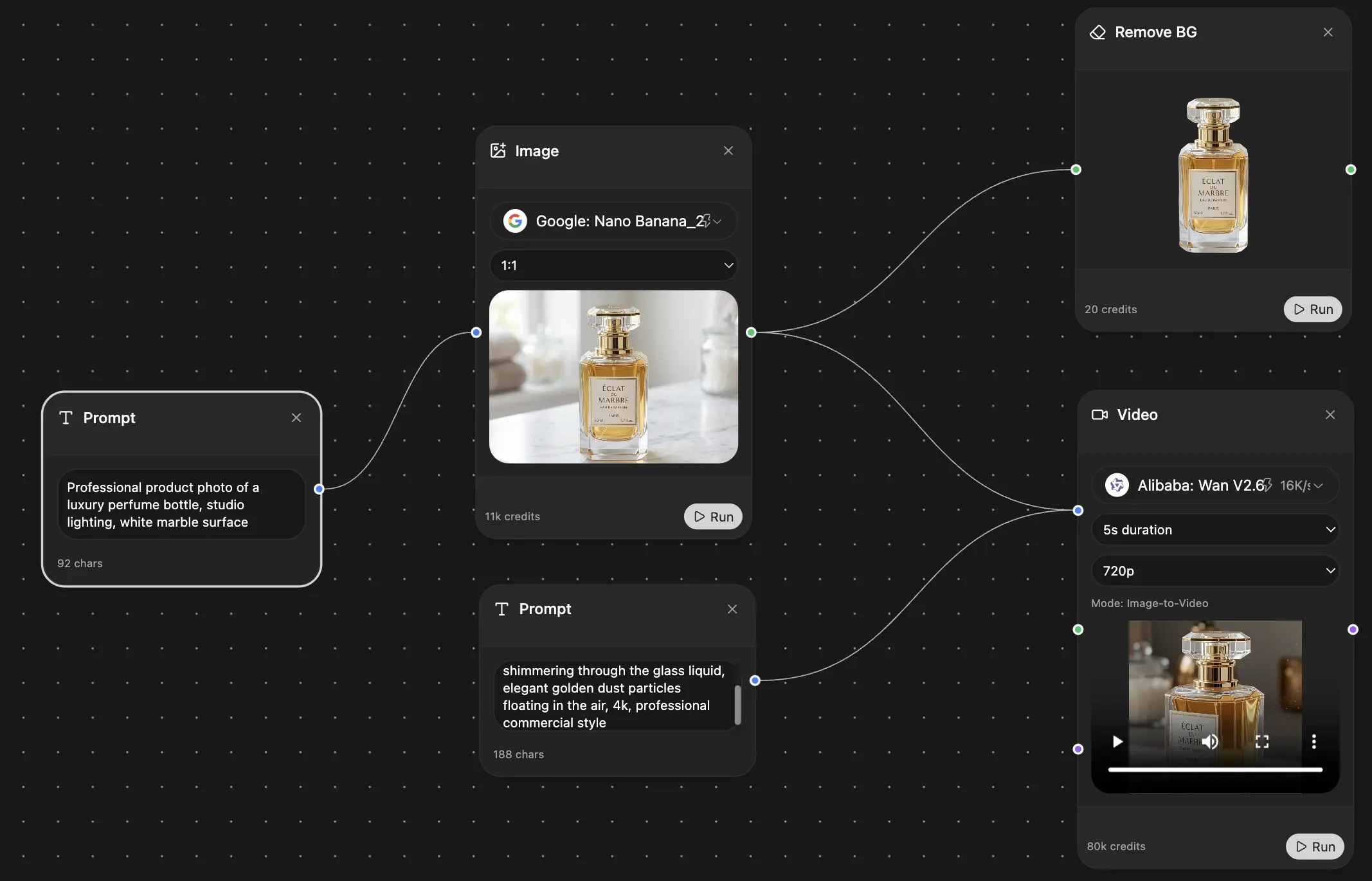
Your infinite AI canvas.
Chat, image, video & motion tools — side by side
Save hours of work and research
Transparent, High-Value Pricing
Trusted by teams at






Free
No credit card required
- 100 credits daily
- 3 AI models to try
- Basic AI chat
Plus
- 1,000,000 credits/month
- 25+ AI models — GPT, Claude, Gemini, Grok & more
- Agent Mode with web search, computer tools and more
- Creative Studio: image generation and video generation
- Project Library: chat with document, website and youtube, podcast generation, flashcards, reports and more
- Workflow Studio and FocusOS
Professional
- Everything in Plus, and:
- 2,100,000 credits/month
- Pro-exclusive models (Claude Opus, Grok 4, Sonar Pro)
- Motion Tools & Max Mode
- First access to latest features
- Access to additional offers
What Our Users Say
Great Tool after 2 months usage
simplyzubair
I love the way multiple tools they integrated in one platform. So far it is going in right dorection adding more tools.
Best in Kind!
barefootmedicine
This is another game-change. have used software that kind of offers similar features, but the quality of the data I'm getting back and the sheer speed of the responses is outstanding. I use this app ...
simply awesome
MarianZ
I just tried it - didnt wanna stay with it, because there is so much like that out there. But it convinced me, because: - the discord-channel is very response and fast - the number of models are quite...
A Surprisingly Comprehensive and Engaging Experience
bruno.battocletti
Zemith is not just another app; it's a surprisingly comprehensive platform that feels like a toolbox filled with unexpected delights. From the moment you launch it, you're greeted with a clean and int...
Great for Document Analysis
yerch82
Just works. Simple to use and great for working with documents and make summaries. Money well spend in my opinion.
Great AI site with lots of features and accessible llm's
sumore
what I find most useful in this site is the organization of the features. it's better that all the other site I have so far and even better than chatgpt themselves.
Excellent Tool
AlphaLeaf
Zemith claims to be an all-in-one platform, and after using it, I can confirm that it lives up to that claim. It not only has all the necessary functions, but the UI is also well-designed and very eas...
A well-rounded platform with solid LLMs, extra functionality
SlothMachine
Hey team Zemith! First off: I don't often write these reviews. I should do better, especially with tools that really put their heart and soul into their platform.
This is the best tool I've ever used. Updates are made almost daily, and the feedback process is very fast.
reu0691
This is the best AI tool I've used so far. Updates are made almost daily, and the feedback process is incredibly fast. Just looking at the changelogs, you can see how consistently the developers have ...