The Real Consolidation Benefits You Actually Get
Discover the real consolidation benefits for tools, data, debt, and teams. Learn which perks show up fast, which take work, and how to skip the common traps.
You've got ten browser tabs open, four logins to remember, and three monthly invoices for tools that all claim to help with the same project. The brief is due tomorrow, your research is scattered across documents, and someone just asked which subscription owns the latest version. That isn't a productivity problem. It's tool fatigue, billing sprawl, and the context-switching tax wearing a trench coat.
Consolidation can fix that mess, but it isn't magic. You won't automatically get lower costs, a painless migration, or a perfect all-in-one workspace. Consolidation benefits depend on overlap, workflow fit, data quality, and how carefully you shut down the old stack. The Federal Reserve's analysis of mergers and acquisitions makes the broader lesson clear: consolidation can increase pricing power while failing to produce statistically significant productivity gains, so fewer tools alone don't prove better operations ().
This guide treats consolidation as a buying decision, not a motivational speech. You'll get answers to four practical questions: What should you consolidate? Which gains can you measure? Where does consolidation create new friction? And how can you roll it out without turning Tuesday into a support ticket festival?
Why Consolidation Is on Your Radar
The trigger usually arrives as a small annoyance. A writer drafts in Google Docs, checks facts in a research app, stores source files in Dropbox, asks an AI assistant for a rewrite, and sends the final version through a project platform. None of those tools is necessarily bad. The problem is that the work crosses all of them, while the person doing the work carries the context between tabs.
A developer faces the same mess in a different costume. Code lives in an IDE, technical notes sit in Notion, team decisions disappear into Slack, and AI conversations remain trapped in whichever model was used that morning. A researcher can spend more time finding the right source, login, or document version than evaluating the information itself. For a practical look at how an AI workspace can reduce that sprawl, see this guide to an .
The financial irritation is more obvious. Finance sees several recurring charges. IT sees duplicate permissions and user accounts. Managers see employees asking where files live. Users see a monthly parade of renewal emails. Everyone has a different symptom, but the underlying issue is the same: the company bought capabilities one at a time and never redesigned the system around the actual workflow.
Operator's rule: Don't consolidate because a vendor used the word “seamless.” Consolidate because you can name the overlap, assign an owner, and measure the result.
The useful question isn't “Can we put everything in one platform?” It's “Which parts of the workflow are repeated, expensive, or fragmented enough to justify the move?” That distinction keeps you out of the all-in-one trap and points you toward savings you can defend.
What Consolidation Means in Practice
Consolidation means moving overlapping tasks, data, or contracts from several places into fewer places, usually one primary system. Treat it as a buying decision with a measurable threshold. Define what stays, what goes, how data moves, and which result proves the replacement earned its cost.
Integration leaves tools separate while letting them exchange information. Slack can connect to Jira, and Google Drive can connect to a project platform, but your team still handles multiple interfaces, vendors, permission models, and renewal dates. Migration is narrower. It transfers data from one system to another without necessarily reducing tool count or eliminating duplicate functionality.

Use this test in the buying meeting:
- Consolidation removes overlap. A creator replaces separate writing, image, and document tools with a workspace that covers repeated production tasks. The business case depends on retiring the old tools and measuring the resulting spend or workflow reduction.
- Integration connects survivors. A developer keeps GitHub, an IDE, and a project tracker, then links them so updates travel between systems. The gain is less manual copying, not fewer systems.
- Migration moves boxes. A team exports documents from one knowledge base and imports them into another. That move creates value only if it also supports a decision about redundant tools.
The distinction matters because a vendor may label integration a consolidation benefit. It can reduce manual work, but it does not automatically reduce subscriptions, logins, or administrative ownership. If your stack still has five places to search, you connected the maze. You did not remove it.
The Four Types of Consolidation Worth Knowing
Buyers generally encounter four forms of consolidation. They overlap, but the purchase decision changes depending on what you're trying to simplify.
Tool and subscription consolidation
This is the version frequently referenced when teams complain about SaaS sprawl. You audit products such as Microsoft Teams, Slack, Notion, Asana, Dropbox, and specialist AI tools, then decide which capabilities need separate homes. The buyer is usually the person who can see both the invoices and the user friction.
Data consolidation
Data consolidation is about trust. A researcher needs source notes, files, and conversations to remain connected. A finance team needs consistent records across entities. A single source of truth only helps if people can find it, govern it, and keep it current. A central junk drawer is still a junk drawer, even if it has a nicer logo.
Debt consolidation
The buyer compares repayment terms, fees, flexibility, and risk before combining balances. Simplicity is useful, but a single payment isn't automatically cheaper. The success signal is the total economic outcome, not the emotional relief of deleting several reminders.
Business consolidation
This can mean merging legal entities, reducing vendor duplication, or combining contracts under stronger commercial terms. It may improve control, but it can also concentrate operational and supplier risk. Keep a fallback plan when a single provider becomes critical to the business.
The Hard Benefits You Can Measure
Consolidation earns its place in a buying decision only when it changes the numbers. Check the ledger, administrative workload, and time spent finding information. Replacing several logos with one does not create savings by itself.
License cost
Integrating three or more single-purpose tools into one platform can produce 15% to 22% operations-cost savings, provided the consolidated workflow covers at least 60% of daily user tasks. A mid-market sales stack described in the fell from about $138,000 per year across point tools to roughly $85,000 to $110,000 per year on a consolidated platform. That implies annual savings of $28,000 to $53,000.
Use those figures as benchmarks, not promises. If the replacement handles only a narrow part of the workflow, employees will retain the old tools and the business will fund both systems.
Administrative overhead
Fewer vendors can reduce renewals, access reviews, billing ownership, and integration failures. A Forrester Total Economic Impact study of a major productivity suite found 18% of total IT team time was saved through improved security and IT operations efficiency, alongside $1.5 million in labor-value impact (Forrester Total Economic Impact study).
The saving comes from removing duplicate administration, not from calling a dashboard a “single pane of glass.” Record the hours spent on account provisioning, permission changes, support tickets, and contract management before setting a target.
Context switching and data leakage
Users switch less when related information stays together instead of requiring repeated exports, copying, and tool changes. Centralizing data can also reduce uncontrolled file copies, but only if the workspace provides usable search, permissions, retention rules, and clear ownership. Without those controls, employees will keep private backups to protect their work.
Payroll and employee records need the same buying discipline. Use a to compare requirements before combining sensitive workflows with surrounding employee-lifecycle systems.
Start measurement before purchase. Map where each request begins, where data is copied, who approves it, and where the final record sits. A focused guide to can help identify the handoffs worth removing first. Then compare the same measures after rollout, including license spend, administrator hours, retrieval time, and duplicate records.
The Hidden Productivity Tax Nobody Talks About
The all-in-one pitch sounds tidy: one login, one bill, one place to work. The trouble starts when the platform becomes a warehouse of features that nobody asked for. A recent academic study found that AI tooling increased completion time for experienced developers by 19% in early 2025, a useful warning that adding or consolidating tools doesn't automatically make work faster ().
The first failure mode is feature bloat. Users open a workspace expecting a writing tool and find project management, image generation, data analysis, automations, and settings menus competing for attention. The second is lock-in. Once one vendor becomes the system of record, switching costs rise because your documents, habits, permissions, and institutional memory all sit there.
The third is the platform tax. You may pay for premium features bundled into the suite even though your team already has a better specialist tool for that job. A creative team may prefer a dedicated design application. A researcher may need a separate database. A regulated organization may need strict separation between systems for governance reasons.

Consolidation belongs in the win zone when the same users repeat the same work across overlapping tools and one owner can enforce a common workflow. It belongs in the drag zone when specialist capability, data separation, or permission complexity matters more than fewer logins. Large teams can also create bottlenecks when one platform's permissions and workflows can't reflect different departments.
If you're evaluating remote work, don't confuse presence with output. A practical resource on how to helps separate availability signals from genuine productivity measures. Your consolidation dashboard should do the same.
The contrarian test: If users need a training session to discover where the replacement hides the work they already do, the platform may be consolidating menus, not friction.
Before approving a mega-suite, ask users to complete their most common workflows in a pilot. Track failed searches, duplicate exports, permission requests, and the number of times people leave the workspace to finish the job. The is real, but a badly designed all-in-one tool can just move that cost inside the platform.
A Realistic Rollout Plan That Survives Contact With Reality
Treat consolidation as an operating project, not a software purchase. A credible rollout can fit a six to eight week cutover window, while the exact sequence depends on data volume, contract timing, and how many teams share the old tools ().
Start with evidence
Week one is the audit. Export a CSV containing every active tool, owner, monthly cost, user group, renewal date, last login, and business purpose. Don't rely on memory. The 2026 SaaS-sprawl benchmark reported that the average company runs about 275 SaaS applications, while large enterprises average 660 applications, and 53% of SaaS licenses sit idle, wasting roughly $21 million a year at the average company (). Those numbers make the point, but your own export is what determines your decision.
Week two is the overlap map. Group tools by function: chat, documents, storage, search, research, coding, design, reporting, and approvals. Mark duplicate capabilities, critical integrations, data owners, and contracts that can't be cancelled immediately.
Pilot before you declare victory
Week three is a two-person pilot. Choose users with different habits, not two people who already love the proposed platform. Set pass or fail criteria, such as completing research in one primary tab, retrieving a file within an agreed time, or producing a document without exporting it through several systems.
Week four is cutover. Schedule it around a slow sprint or content cycle. Keep a parallel-run buffer of three to five days, and protect the original data until verification is complete. The source guidance also flags a 15% to 25% first-sync record corruption risk, so export validation and recovery access aren't optional.

Kill cleanly, then verify
Week five is the kill list. Cancel contracts, revoke old SSO entries, remove integrations, recover unused licenses, and document who owns the remaining vendors. Don't forget offboarding. A user leaving the company shouldn't leave behind an orphaned account or an unclaimed project archive.
Week six is verification. Compare current usage with the audit. Check active seats, recurring costs, search success, support volume, file retrieval, and user completion of the pilot workflows. If the results aren't better, don't hide behind adoption percentages. Fix the workflow or reverse the decision.
The common landmines are predictable: skipping the audit, choosing the flagship product before the pilot ends, underestimating data export pain, and forgetting the offboarding trail. A structured approach to can help teams define the workflow before they decide which tools deserve to survive.
How Zemith Fits the Consolidation Equation
Zemith fits the tool-consolidation category when a user or team is paying for separate AI services across writing, research, documents, coding, image generation, and notes. It provides access to multiple AI models, document assistance, creative tools, coding support, research features, Projects, and Libraries in one workspace. That makes it a candidate for consolidation, but the candidate still has to pass your workflow audit.
That's the useful recommendation. Zemith isn't a reason to cancel every specialist application. A developer invested in a niche IDE, or a creative professional dependent on a particular production tool, may feel friction during the first two weeks. Keep those tools when they create compounding value. Consolidate the repetitive AI layers around them when the overlap is obvious.
For buyers comparing architecture, the angle matters because model choice can remain inside one workspace instead of forcing users to maintain separate accounts for every task. Run the same pilot you'd run for any other platform, then keep the result only if it reduces real duplication.
The One Decision Rule That Ties It All Together
Consolidate when the same task or data repeats across three or more tools, when the monthly stack cost exceeds the friction of switching, and when one team owns the buying decision. Those conditions give you overlap, economic motivation, and someone accountable for execution.
Hold your current stack when a specialty tool delivers compounding value, compliance or data-residency rules require separation, or migration would consume more engineering time than the savings can recover. A smaller vendor list isn't automatically a healthier operating model. Sometimes redundancy is deliberate resilience, especially when one supplier becoming unavailable would stop the work.
Run a 30-minute stack audit this week. List every subscription, every tool used during a normal week, who owns each account, and where the same file or task appears more than once. Flag the top three overlaps, then test one replacement with real work before you negotiate a company-wide cutover.

Consolidation is a buying decision, not a personality trait.
Zemith brings AI models, document work, research, coding, creative tools, and project context into one workspace, giving you a practical option for reducing overlapping AI subscriptions and scattered workflows. Audit your current stack, test the workflows that matter, and visit to see whether it earns a place in the consolidated setup.
Explore Zemith Features
Everything you need. Nothing you don't.
One subscription replaces five. Every top AI model, every creative tool, and every productivity feature, in one focused workspace.
Every top AI. One subscription.
ChatGPT, Claude, Gemini, DeepSeek, Grok & 25+ more







Always on, real-time AI.
Voice + screen share · instant answers
What's the best way to learn a new language?
Immersion and spaced repetition work best. Try consuming media in your target language daily.
Voice + screen share · AI answers in real time
Image Generation
Flux, Nano Banana, Ideogram, Recraft + more

Write at the speed of thought.
AI autocomplete, rewrite & expand on command
Any document. Any format.
PDF, URL, or YouTube → chat, quiz, podcast & more
Video Creation
Veo, Kling, Grok Imagine and more

Text to Speech
Natural AI voices, 30+ languages
Code Generation
Write, debug & explain code
Chat with Documents
Upload PDFs, analyze content
Your AI, in your pocket.
Full access on iOS & Android · synced everywhere
Your infinite AI canvas.
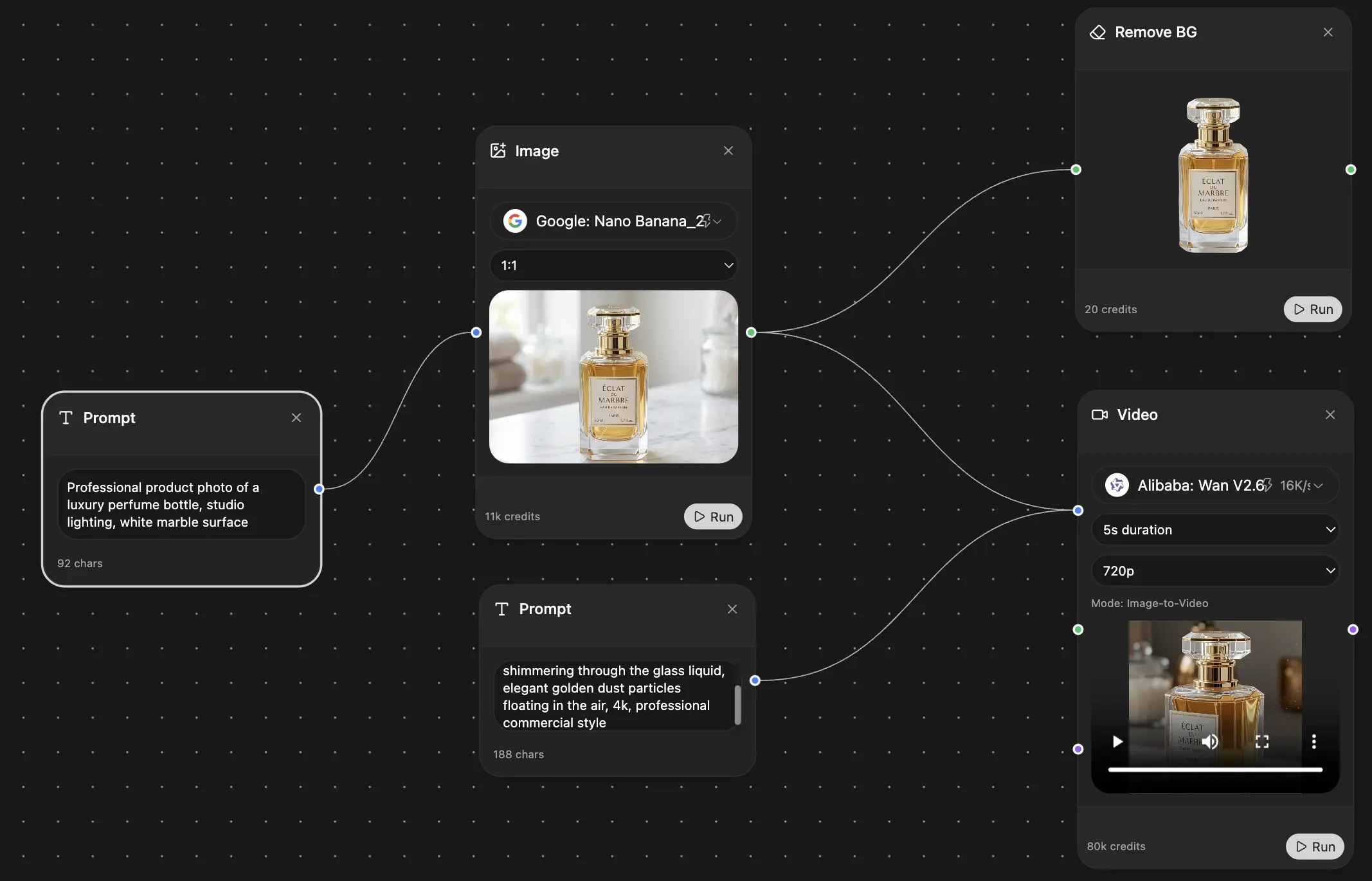
Chat, image, video & motion tools — side by side
Save hours of work and research
Transparent, High-Value Pricing
Trusted by teams at






Free
No credit card required
- 100 credits daily
- 3 AI models to try
- Basic AI chat
Plus
- 1,000,000 credits/month
- 25+ AI models — GPT, Claude, Gemini, Grok & more
- Agent Mode with web search, computer tools and more
- Creative Studio: image generation and video generation
- Project Library: chat with document, website and youtube, podcast generation, flashcards, reports and more
- Workflow Studio and FocusOS
Professional
- Everything in Plus, and:
- 2,100,000 credits/month
- Pro-exclusive models (Claude Opus, Grok 4, Sonar Pro)
- Motion Tools & Max Mode
- First access to latest features
- Access to additional offers
What Our Users Say
Great Tool after 2 months usage
simplyzubair
I love the way multiple tools they integrated in one platform. So far it is going in right dorection adding more tools.
Best in Kind!
barefootmedicine
This is another game-change. have used software that kind of offers similar features, but the quality of the data I'm getting back and the sheer speed of the responses is outstanding. I use this app ...
simply awesome
MarianZ
I just tried it - didnt wanna stay with it, because there is so much like that out there. But it convinced me, because: - the discord-channel is very response and fast - the number of models are quite...
A Surprisingly Comprehensive and Engaging Experience
bruno.battocletti
Zemith is not just another app; it's a surprisingly comprehensive platform that feels like a toolbox filled with unexpected delights. From the moment you launch it, you're greeted with a clean and int...
Great for Document Analysis
yerch82
Just works. Simple to use and great for working with documents and make summaries. Money well spend in my opinion.
Great AI site with lots of features and accessible llm's
sumore
what I find most useful in this site is the organization of the features. it's better that all the other site I have so far and even better than chatgpt themselves.
Excellent Tool
AlphaLeaf
Zemith claims to be an all-in-one platform, and after using it, I can confirm that it lives up to that claim. It not only has all the necessary functions, but the UI is also well-designed and very eas...
A well-rounded platform with solid LLMs, extra functionality
SlothMachine
Hey team Zemith! First off: I don't often write these reviews. I should do better, especially with tools that really put their heart and soul into their platform.
This is the best tool I've ever used. Updates are made almost daily, and the feedback process is very fast.
reu0691
This is the best AI tool I've used so far. Updates are made almost daily, and the feedback process is incredibly fast. Just looking at the changelogs, you can see how consistently the developers have ...