AI Photo Analyzer: How to Extract Insights from Any Image
Learn how an AI photo analyzer works, from object detection to OCR. Discover practical workflows, evaluation tips, and how Zemith streamlines image analysis.
You've got a photo open on your screen that should be useful, but it's just sitting there like a stubborn little mystery. Maybe it's a receipt you need to file, a whiteboard snapshot from a meeting, a product label, or a screenshot with text you can't copy. That's where an ai photo analyzer earns its keep, turning visual clutter into text, tags, descriptions, and searchable structure without making you manually squint through every pixel.
The shift isn't just convenience. As image volume keeps rising across products, research, operations, and support workflows, teams need tools that can interpret pictures fast enough to keep up with the work itself, not just admire it after the fact. A good analyzer can read text, identify objects, describe scenes, and flag risky content, but the better question is whether you can trust the result when the image is messy, the context is ambiguous, or the outcome matters.
For a practical primer on how these systems are showing up in real creative workflows, the piece is a useful companion read. It helps frame why image analysis has become part of everyday production, not a niche trick for one team with one odd image problem.
Why AI Photo Analyzers Are Changing How We Work with Images
A lot of work still starts with someone staring at a photo and thinking, “Great, now I have to extract the useful stuff by hand.” That might be a blurry packing slip from a supplier, a conference slide shot from the back row, or a handwritten note snapped before the ink smudged any further. An AI photo analyzer is the bridge between that raw image and something your team can search, sort, or act on.
At a high level, these tools do a few jobs at once. They can identify objects, read text with OCR, describe scenes, extract metadata, and sometimes flag unsafe content or unusual patterns. The market pressure behind this is real, too, because more image generation and image use means more need for automated interpretation, tagging, and quality checks, with the global generative AI market projected to reach $67.2 billion in 2026 and the AI image generation segment estimated at $12.4 billion that same year, or about 18% of the total .
That scale matters because people don't just want pretty outputs anymore. They want systems that can help with cataloging, accessibility, moderation, and document handling without turning every image into a manual review ticket. The best tools also plug into broader workflows, so you're not bouncing between a separate vision app, a transcription tool, and a note system just to finish one task.
Practical rule: if the image is part of work, the analysis should end in a workflow, not a dead-end result panel.
That's why platforms like Zemith matter in practice. They consolidate different AI models in one workspace, which means teams can compare interpretations, keep context in one place, and avoid the annoying subscription scavenger hunt that comes with stitching together separate point tools.
The Technology Behind AI Photo Analysis
Under the hood, an ai photo analyzer usually combines several vision functions instead of relying on one model to do everything. A useful way to read the output is as a chain of steps that moves from “what is in the picture?” to “what does it mean here?” and then to “can a human trust this enough to act on it?”
From detection to boundaries
Object detection is usually the first pass. It marks visible items in an image, a laptop, a bottle, a face, a traffic sign, a cat, a receipt. That is fast and useful for tagging or sorting. Image segmentation goes further, separating one object from another at the boundary level instead of only drawing a rough box around it.
That difference matters in messy images. Bounding boxes work for a warehouse label. They are weaker when you need to isolate a logo from a crowded storefront shot or separate overlapping objects in a product image. Microsoft's Image Analysis 4.0 shows the common feature set well, with OCR, captions, dense captions, tags, object detection, people detection, and smart crop, and it is generally available when the use case fits .
Text, context, and hidden signals
OCR does the heavy lifting for screenshots, scanned pages, labels, and receipts. The image analyzer in ScreenApp accepts JPG, PNG, or WEBP, lets users choose fields like objects, text, scene, colors, faces, and landmarks, and returns output in the browser or as JSON/CSV . Export options like that matter because analysis has to leave the browser tab and fit into the rest of the workflow.
Scene understanding comes after raw detection and text reading. It answers the awkward human question, “What is happening here?” That is where multi-model access helps. Different models handle different image types in different ways, and a platform that can route the same photo through several models, like Gemini-2.5 Pro, Claude 4 Sonnet, or GPT o3-mini, gives you a better chance of catching disagreement before it turns into a bad call. For teams setting up that kind of routing, is a useful reference for how image analysis can sit inside a broader agent flow.
Useful mental model: detection finds the thing, segmentation draws the thing, OCR reads the thing, and context decides whether the thing actually means what you think it means.
For identity-related image tasks, the is a good reference point, since face matching has different failure modes and verification requirements than general image description.
A practical system does not stop at a label or caption. It hands off the result to review, routing, or storage logic, because image analysis is only useful when someone can verify the output and use it in context.
Real-World Use Cases That Deliver Value

The strongest image analysis workflows are not flashy. They are the ones that fit into real work without creating another place for people to check or correct the same image twice. Content teams use an analyzer to draft alt text so accessibility work does not sit in a backlog. E-commerce teams use it to speed up catalog tagging, category assignment, and product normalization, especially when someone uploads several near-identical product photos and expects the system to distinguish what matters.
Research and archive work also benefits. A historian, analyst, or operations manager can use OCR and scene interpretation to turn a scanned memo, label, map, or old photo into something searchable. In those workflows, the output does not need to sound polished. It needs to be structured enough that a human can verify it and keep moving.
Where the workflow needs human eyes
Human review matters most when the image carries meaning beyond the pixels. Accessibility descriptions need editorial judgment. Moderation needs policy context. Manufacturing defect checks need a person to confirm whether a stain is a defect or just glare. If the job is to identify a vehicle from a photo, a focused reference like shows how image recognition becomes more useful when it is tied to a specific, repeatable task instead of vague commentary.
For teams that want image analysis to sit inside a broader productivity flow, Zemith's document assistant, creative tools, and image analysis features let people move from image to prompt, summary, or task without bouncing between tools. That kind of workflow glue saves time, but it still depends on human judgment at the handoff point.
Screen-reader use deserves the same caution. Good image descriptions make products, social posts, and research assets more usable, but the description still needs a human pass when nuance matters. If the image is ambiguous, the right move is to draft a cautious description, not to let the model improvise like it is writing a caption for social media.
Rule of thumb: if the image can affect a customer, a compliance decision, or a public record, treat the analyzer as a drafting assistant, not an authority.
The business value comes from reducing the first-pass burden. The human value comes from not forcing people to sort every image by hand.
When to Distrust Your AI Photo Analyzer Results
The most expensive mistake is treating a confident answer as a correct one. AI image systems can produce outputs that read cleanly even when the reasoning is weak, so verification has to focus on the path as much as the answer. A 2024 NIH-backed study reported that some expert-level image analysis rationales can be flawed even when the final answer appears plausible, which is a strong reminder to inspect how the model got there, not just what it concluded .
The common failure modes
Blur is the easiest place to get burned. Heavy shadows, low resolution, motion blur, odd angles, and aggressive cropping all reduce reliability, even if the tool looks sharp in demo mode. The benchmarked system noted in the brief showed strong results on clean images, with 98.7% accuracy for object detection, 94.3% accuracy for scene-context understanding, and facial recognition and text extraction exceeding 99% under optimal conditions, but it also warned that performance drops on degraded inputs . That is the trade-off, clean inputs produce clean-looking answers, and real-world images do not stay clean for long.
Context can fail just as easily. A photo of a bat could be sports gear or an animal. Two nearly identical mugs can be confused by reflections, background clutter, or a slight change in angle. Cropped images also create blind spots, because the model cannot recover details it never sees.
The teams that use these tools well do not stop at, did it answer. They ask what would make the answer unsafe to trust, and they route those cases into review before anyone acts on them.
A verification checklist that actually helps
- Check image quality first: if the image is blurry, dark, or cropped, treat the first answer as provisional.
- Cross-check with a second model: disagreement is useful because it points to ambiguity.
- Inspect the extracted text or labels manually: especially for names, dates, serials, and compliance-sensitive details.
- Escalate sensitive cases to a person: medical, legal, archival, and regulated content should not rely on model confidence alone.
For a broader framework on evaluating sources and outputs before you trust them, the internal guide fits this workflow well.
Cross-model review is where a platform can help instead of hurt. Zemith's multi-model setup gives you a built-in way to compare outputs and catch inconsistencies before they turn into workflow decisions. That does not remove error, but it makes silent failure harder to miss.
How to Evaluate and Choose the Right AI Photo Analyzer
Tool choice should start with your images, not the product page. A photo analyzer that looks strong on polished demo screenshots can break down on your actual screenshots, receipts, old scans, or product photos taken under ugly office lighting. The right evaluation is about fit, failure modes, and how much manual cleanup your team can tolerate.
What to measure before you commit
Start with accuracy on your own image types. If you mostly handle scanned documents, OCR quality matters more than scene captions. If you run e-commerce, object tagging, color recognition, and export formatting matter more. If you need moderation, safety labels and policy controls should be the first thing you test.
Then check processing speed, privacy and retention, supported file formats, and export options. A tool that accepts JPG, PNG, or WEBP and can export to JSON/CSV is easier to fit into a real workflow, because analysis only helps if you can move the output into the next system without rework. Google's Vision AI docs make the same practical point, with Cloud Vision API positioned for quick and easy integration of image labeling, face and landmark detection, OCR, and safe search .
Dedicated vision API or multi-model platform
Microsoft's Image Analysis 4.0 is a solid example of a dedicated service with a clear feature set and a generally available release. You can review how it is framed in the . A multi-model platform makes more sense when image analysis is only one part of a larger work loop and you want prompt writing, document handling, and research in the same place.
Decision shortcut: if your team only needs one vision function, a dedicated API is usually cleaner. If your team needs image analysis plus writing, research, and comparison, a multi-model workspace is easier to live with.
For a deeper comparison framework, the internal guide helps map capabilities to actual use cases instead of marketing language.
Practical Workflows and Prompt Examples for Image Analysis
A useful image analysis workflow starts with a narrow question and a clear exit condition. If the prompt says only “analyze this image,” the model will often answer with broad descriptions that sound confident but miss the part you need. A better flow is simple, upload the image, state the task, define the output format, then verify the result before anyone copies it into a report, workflow, or customer reply.

For screenshot OCR, the prompt can be direct: “Extract all visible text, preserve line breaks, and flag any unreadable sections.” For a product photo, use “Identify the object, list visible materials, note colors, and mention any defects or ambiguous details.” For a chart or diagram, ask for “the title, axes, trends, and any labels that appear in the image.” These prompts work because they tell the model what to look for and what not to invent.
If the task is more visual than textual, the prompt should also constrain the style of the answer. The guide shows how to ask for grounded output instead of loose description, which matters when you need a result that stays close to the pixels.
A prompt structure that holds up
- Task: what the model should do.
- Constraints: what it should not guess.
- Format: bullets, table, JSON, or plain text.
- Confidence note: ask it to mark uncertain areas.
That structure keeps the model honest, and it makes review easier. You can reuse the same prompt across many images, then compare outputs without reformatting each one by hand.
For exports, JSON works well when another system needs the data, and CSV works well when a human needs to scan a batch. The exact tool matters less than the review loop. ScreenApp's browser output and export options show why the last mile matters just as much as the model itself, especially when the output has to move into another process without extra cleanup.
The embedded video below is worth a look if you want a visual walkthrough of practical image-analysis workflows.
Batch jobs are where human review pays off. Keep the prompt stable, keep the image quality consistent, and log every correction a reviewer makes. That correction log becomes the clearest signal for where the model is reliable and where it needs a person to check the result, especially in workflows that touch sensitive images such as the .
Privacy, Ethics, and Responsible Image Analysis
People are comfortable uploading a selfie until they realize the app might retain it, classify it, or use it to infer sensitive traits. That's why privacy policy isn't a side note in image analysis, it's part of the product design. Some tools explicitly advertise no retention after processing, and others emphasize unsafe-content detection or age estimation, which tells you buyers are already thinking about moderation and compliance, not just convenience .
The ethical line gets sharper with facial recognition, age estimation, and personal photos. If you're analyzing images that include people, you need a policy for consent, purpose limitation, and retention. For sensitive contexts, local processing or tightly controlled cloud APIs are safer than sending everything into a general workspace with unclear storage behavior.
A good example of why this matters is the from ContentRemoval.com, which makes it obvious that image handling isn't abstract when personal harm is on the line. Once an image is uploaded, copied, or shared, your operational mistakes can become someone else's privacy problem.
What responsible teams actually do
- Minimize exposure: only upload what you need.
- Separate projects: keep sensitive work in isolated workspaces.
- Check retention terms: know whether files are stored, reused, or deleted.
- Use human review for high-risk images: don't automate final decisions on personal or regulated content.
Zemith's workspace organization and project structure help here because teams can keep analysis tied to a specific context instead of scattering it across random chats and uploads. That makes governance easier, and in practice, governance is just “knowing where the image went and who touched it.”
Responsible image analysis is not slower by default. It's just more deliberate. That's a good trade if the content involves real people, regulated records, or anything you'd regret explaining in a compliance review.
Getting Started with AI Photo Analysis Today
Start with one job, not ten. Pick the image type that wastes the most time right now, test a handful of representative examples, and decide what “good enough” means before you automate anything. Then add verification, especially if the output will affect customers, records, or anything sensitive.
A simple rollout usually looks like this. First, choose the use case, such as OCR for screenshots or tagging for product photos. Next, compare a dedicated vision API with a multi-model workspace. Then, define your human review rule, because that's what keeps the system honest when the image gets weird.
The big habits are straightforward. Understand the technology layers, distrust outputs that look too neat, think about privacy before upload, and use prompts that force specificity. That combination makes AI photo analysis practical instead of theatrical.
If you want a single place to try image analysis alongside document tools, prompt workflows, and multiple models, gives you that without making you juggle a pile of disconnected subscriptions. It's a sensible way to start building a real image workflow, especially if you care about verification, not just speed.
Explore Zemith Features
Everything you need. Nothing you don't.
One subscription replaces five. Every top AI model, every creative tool, and every productivity feature, in one focused workspace.
Every top AI. One subscription.
ChatGPT, Claude, Gemini, DeepSeek, Grok & 25+ more







Always on, real-time AI.
Voice + screen share · instant answers
What's the best way to learn a new language?
Immersion and spaced repetition work best. Try consuming media in your target language daily.
Voice + screen share · AI answers in real time
Image Generation
Flux, Nano Banana, Ideogram, Recraft + more

Write at the speed of thought.
AI autocomplete, rewrite & expand on command
Any document. Any format.
PDF, URL, or YouTube → chat, quiz, podcast & more
Video Creation
Veo, Kling, Grok Imagine and more

Text to Speech
Natural AI voices, 30+ languages
Code Generation
Write, debug & explain code
Chat with Documents
Upload PDFs, analyze content
Your AI, in your pocket.
Full access on iOS & Android · synced everywhere
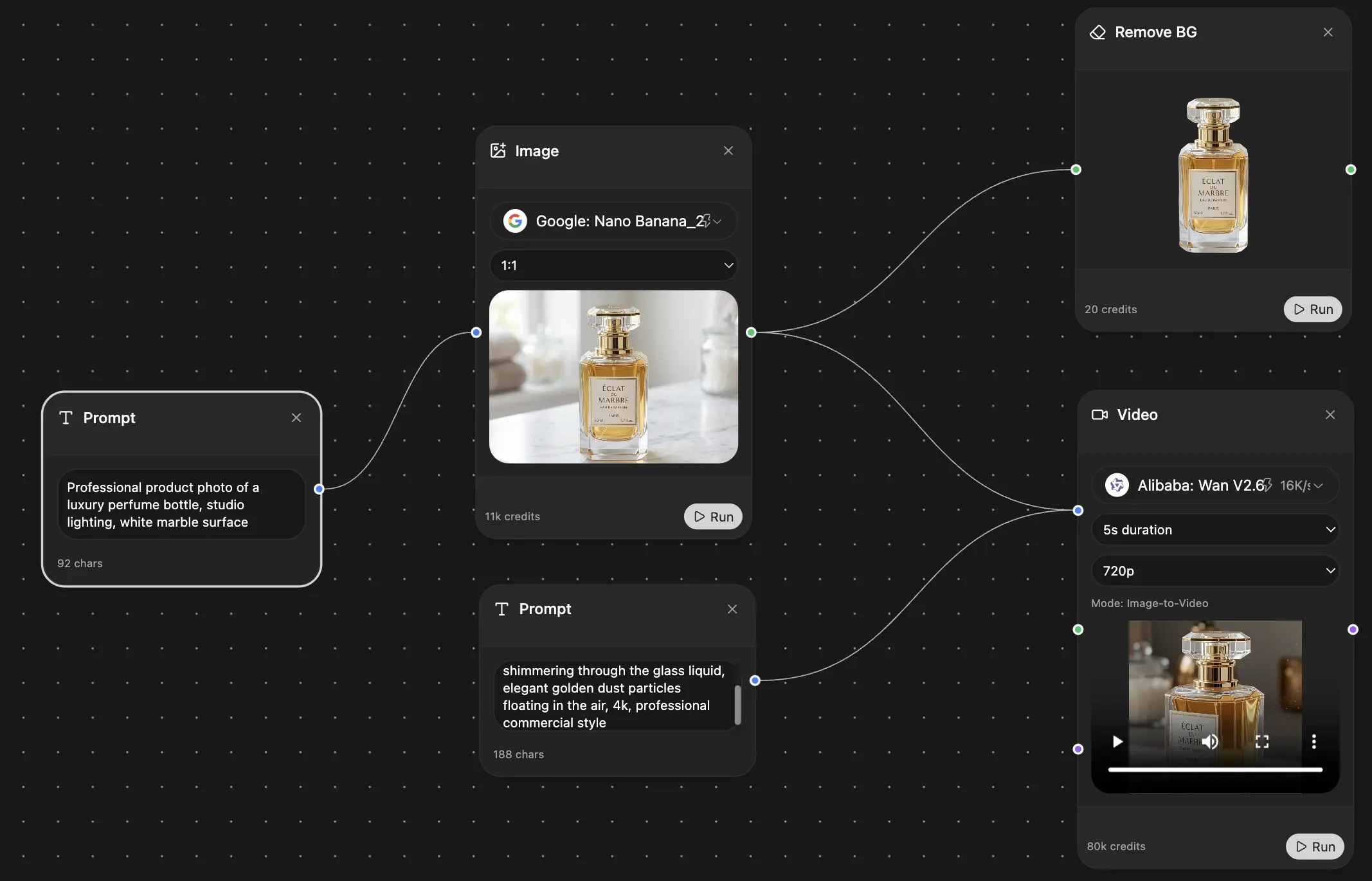
Your infinite AI canvas.
Chat, image, video & motion tools — side by side
Save hours of work and research
Transparent, High-Value Pricing
Trusted by teams at





Free
No credit card required
- 100 credits daily
- 3 AI models to try
- Basic AI chat
Plus
- 1,000,000 credits/month
- 25+ AI models — GPT, Claude, Gemini, Grok & more
- Agent Mode with web search, computer tools and more
- Creative Studio: image generation and video generation
- Project Library: chat with document, website and youtube, podcast generation, flashcards, reports and more
- Workflow Studio and FocusOS
Professional
- Everything in Plus, and:
- 2,100,000 credits/month
- Pro-exclusive models (Claude Opus, Grok 4, Sonar Pro)
- Motion Tools & Max Mode
- First access to latest features
- Access to additional offers
What Our Users Say
Great Tool after 2 months usage
simplyzubair
I love the way multiple tools they integrated in one platform. So far it is going in right dorection adding more tools.
Best in Kind!
barefootmedicine
This is another game-change. have used software that kind of offers similar features, but the quality of the data I'm getting back and the sheer speed of the responses is outstanding. I use this app ...
simply awesome
MarianZ
I just tried it - didnt wanna stay with it, because there is so much like that out there. But it convinced me, because: - the discord-channel is very response and fast - the number of models are quite...
A Surprisingly Comprehensive and Engaging Experience
bruno.battocletti
Zemith is not just another app; it's a surprisingly comprehensive platform that feels like a toolbox filled with unexpected delights. From the moment you launch it, you're greeted with a clean and int...
Great for Document Analysis
yerch82
Just works. Simple to use and great for working with documents and make summaries. Money well spend in my opinion.
Great AI site with lots of features and accessible llm's
sumore
what I find most useful in this site is the organization of the features. it's better that all the other site I have so far and even better than chatgpt themselves.
Excellent Tool
AlphaLeaf
Zemith claims to be an all-in-one platform, and after using it, I can confirm that it lives up to that claim. It not only has all the necessary functions, but the UI is also well-designed and very eas...
A well-rounded platform with solid LLMs, extra functionality
SlothMachine
Hey team Zemith! First off: I don't often write these reviews. I should do better, especially with tools that really put their heart and soul into their platform.
This is the best tool I've ever used. Updates are made almost daily, and the feedback process is very fast.
reu0691
This is the best AI tool I've used so far. Updates are made almost daily, and the feedback process is incredibly fast. Just looking at the changelogs, you can see how consistently the developers have ...