How to Improve Creative Writing: Practical Habits & AI Tools
Learn how to improve creative writing with practical habits, craft techniques, revision workflows, and AI tools that help finish better drafts.
You're probably staring at a draft that has decent sentences, a few promising paragraphs, and absolutely no pulse. The opening feels flat, the dialogue sounds like it was written by someone who's never heard a human speak, and every “fix it later” note is starting to look suspiciously like a lifestyle. If that sounds familiar, good, because how to improve creative writing usually starts right there, with a draft that technically exists but doesn't yet feel alive.
The problem is rarely that you need more inspiration. It's usually that you need a better system for spotting what's weak, fixing that weakness on purpose, and then repeating the process without turning your voice into beige soup. Generic advice like “write every day” isn't wrong, it's just too broad to help when the core issue is pacing, voice, structure, or stale imagery.
Why Most Creative Writing Advice Stops Working
The classic advice pile is familiar enough to be funny. Read more. Write daily. Get feedback. Show, don't tell. It all sounds wise until you're staring at a scene that still doesn't work, and the advice feels like a motivational poster hanging above a sink full of cold coffee. The problem is that these ideas do not tell you what to fix first.
A better approach is more mechanical. One practical writing workflow recommends tracking each session's date, day, time of day, location, duration, and word count, then calculating words per hour after at least ten writing sessions or a couple of weeks of data collection (). That kind of record keeping helps you spot patterns, like which times of day and locations produce the fastest writing, instead of pretending every writing session is spiritually identical. If your kitchen table turns you into a raccoon with a deadline, the data will probably admit it before your ego does.

Practical rule: if you can't name the weakness, generic advice just keeps you busy.
Generic rules create busywork
Most broad advice assumes the same fix works for every writer. It doesn't. A writer with weak dialogue needs something different from a writer whose plots meander, and both of them need a different fix from someone who keeps polishing sentences before the draft has a spine. That is why advice built on diagnosis beats advice built on slogans.
A simple mental shift helps. Instead of asking, “How do I become a better writer?” ask, “What exactly is failing here, voice, character, plot, dialogue, or imagery?” That question does not make the work easier, but it makes it clearer, and clarity is usually where momentum starts.
Another productivity example suggests setting a target of 500 words in 30 minutes, then taking a 30-minute break before the next sprint (). A similar sprint approach is described in , where short focused bursts help lower the pressure around starting. That matters because creative writing often falls apart when the writer tries to live inside one endless, heroic session. Real work usually happens in shorter cycles, with recovery built in, because the brain is not a fountain. It is more like a moody printer with opinions.
Build a Writing Habit That Produces Words
A useful writing habit is more than “show up.” It is a loop you can measure, compare, and improve. Track each session, then stop treating streaks like progress. A streak only proves you opened the document. A session log shows whether you produced anything and under what conditions.
Log the session, not the fantasy
A one-line entry is enough. Write down the date, day, time of day, location, duration, and word count, then review the pattern after a few weeks or ten writing sessions. The point is not paperwork, it is pattern recognition. If you always write better after lunch, or if one café gives you twice the output of your desk, that is useful data, not trivia.
Leave the glamorous version of yourself out of the spreadsheet. The spreadsheet only respects what happened.
Use sprints, not marathons
Short sprints work because they lower the emotional cost of starting. A writing sprint that aims for 500 words in 30 minutes followed by a 30-minute break can turn drafting into repeatable cycles instead of a single exhausting push. The break matters. Without it, writers keep grinding long after the draft quality has collapsed.
A practical weekly rhythm for a day-job writer might look like this. Two weekday sprints, one longer weekend session, and one review block where you sort notes and look for patterns. The week does not need to be heroic, it needs to be repeatable.
For a cleaner reset when momentum stalls, this guide on fits neatly beside the habit log. It is less about forcing inspiration and more about building conditions where words show up on schedule.
Sharpening the Five Core Craft Skills
Creative writing gets easier when you stop treating it like one giant skill. It's a set of smaller skills, and each one can fail in a different way. Voice can sound generic. Character can feel like a cardboard cutout with a pulse. Plot can happen because the author wanted it to. Dialogue can explain too much. Imagery can drown in vague adjectives.
Voice needs contrast, not just consistency
If every paragraph sounds the same, the voice is probably too flat. Try the one paragraph, two moods exercise. Write the same paragraph once in a restrained tone, then again with more pressure, humor, or urgency. If both versions feel interchangeable, the passage probably needs sharper diction or a stronger point of view.
Character needs contradiction
Flat characters often want the same thing in every scene, and that gets old fast. Use the contradiction-and-desire test. Ask what the character wants, then ask what they do that clashes with it. A person who wants control but keeps avoiding decisions is more interesting than someone who just announces they're conflicted.
Plot needs cause and effect
A plot that only contains events isn't really moving. Run a cause-and-effect audit. For each scene, ask whether one thing leads to the next or whether the scene is just sitting there like a decorative chair. If you can't explain the connection, the scene may need a different order or a clearer consequence.
Dialogue needs subtext
People rarely say exactly what they mean, especially when they're stressed. Take a line of dialogue and rewrite it so the characters imply more and explain less. If a character says, “I'm fine,” but the scene shows them avoiding eye contact and folding a napkin into confetti, the line finally has texture. That's much stronger than two pages of exposition disguised as conversation.
Imagery needs sensory pressure
The clearest advice here comes from concrete language. San Jose State University's writing center defines it through the five senses, sight, sound, smell, taste, and touch, so readers experience the scene physically (). Swap abstractions for sensory detail. “The room felt unsettling” becomes fluorescent hum, stale air, metallic smell, and the scrape of a chair. That's the difference between telling a reader something and dropping them into it.
For more craft-level tactics, this resource on pairs well with the five-skill check above.

Targeted Exercises and Prompts for Real Weak Spots
Most writers don't need more pages. They need the right drill. A weakness in voice shouldn't be addressed with a giant story. A weak scene turn shouldn't be fixed by “just keep writing.” Short exercises work because they isolate the problem and make revision manageable.
Pick the drill that matches the problem
Start with a 10-minute freewrite when the issue is idea generation. Write fast, don't edit, and don't stop to make it pretty. That separation between drafting and polishing matters because it lets raw material exist without being strangled by self-censorship ().
If voice feels bland, do a one-page imitation drill. Pick a piece with a distinct tone, then write a page that borrows the rhythm or stance without copying the content. If dialogue feels stiff, write a dialogue-only scene with no narration. If imagery feels thin, build a sensory snapshot from a single image and force yourself to use sound, texture, and smell, not just sight.
Practical rule: generate first, revise second. Polishing too early is where originality goes to nap.
Revision belongs inside the exercise
The exercise is only half the work. After the first draft, revise for the exact weakness you were training. A voice drill gets better when you cut anything that sounds generic. A dialogue drill gets better when you remove explanations and see whether the exchange still works. A sensory drill gets better when you delete the vague adjectives and keep only the details that do actual work.
That's the difference between busy writing and useful practice. You're not collecting pages for the sake of it. You're training one muscle at a time, and the page becomes a test instead of a trophy.
For prompt generation, this guide on can help turn a weak spot into a targeted exercise instead of another random brainstorm.
The Revision and Feedback Loop That Closes the Gap
First drafts are supposed to be messy. They are raw material, not the final piece, and a lot of writers burn time pretending a rough draft should already read like a finished one. The faster route is usually a tighter revision loop, not a bigger burst of inspiration on page one.
Cool the draft before you touch it
Put the draft aside for a while, then come back with fresh eyes. Distance makes weak passages easier to spot, because tired readers excuse things that a rested reader catches immediately. You notice the line that repeats itself, the scene that drifts off course, and the sentence that sounded clever late at night but now reads like it escaped from a broken appliance. For a plain-language revision checklist, covers the basic habit well enough to use as a starting point.
Fix structure before sentence polish
Start with structure. Check whether the scene order works, whether the pacing slows at the wrong moment, and whether each section is doing a clear job. Only after that should you move to the line pass and tune prose, rhythm, and word choice. If you reverse the order, you end up polishing the paint while the frame is still crooked.
That order matters because most weak drafts are not weak in only one way. A story can have sharp sentences and still sag because the middle is confused or overextended. A scene can sound polished and still fail because nothing changes inside it.
Ask useful feedback questions
Good critique starts with specific questions. If you ask for “thoughts,” you usually get polite fog. Give readers a short list that points them toward the problem you want to see.
- Where did you get bored?
- Which character felt least believable?
- What confused you on the first read?
- What line or image stayed with you?
- What felt unnecessary?
A workshop model works because it repeats the loop, draft, critique, revise, then critique again. That cycle exposes patterns in your work instead of rewarding effort for its own sake. A workshop-based approach to revision is also what makes the feedback useful, since you can compare reactions across versions and see whether the same weak spot keeps showing up. For a practical companion on revising with a clear process, fits neatly into that loop.

Using AI Tools Without Flattening Your Voice
AI is useful when it handles the parts of writing that aren't really writing, like idea sorting, angle testing, or turning a messy outline into something readable. The mistake is letting it flatten the choices that make the piece sound like you. If the output starts sounding like every other polished internet paragraph, the tool is doing too much of the creative job.
Keep AI in the first-reader role
Use it to brainstorm story angles, test plot logic, or rephrase a clunky sentence after you've already decided what you want to say. Zemith's Smart Notepad can help with autocomplete, rephrasing, style adjustments, and turning bullet points into polished content, which makes it useful for moving from messy notes to a usable draft without changing the underlying voice. The key is to treat it like a first reader, not an author.
If you want structured ideation, prompt the tool from the weakness you already found. That keeps the AI aligned with the craft problem instead of producing random “creative” clutter. For example, if your dialogue feels stiff, ask for alternate subtextual intentions. If your plot is soft, ask for possible cause-and-effect links. If your opening is dull, ask for a few different ways to enter the scene.
Use rewriting, but keep the fingerprints
A helpful workflow is simple. Draft in your own language, ask AI to suggest cleaner phrasing, then decide which lines still sound like you. That last step matters. Voice isn't just prettiness. It's selection, rhythm, and attitude, and those disappear fast if you outsource every revision pass.
The same principle shows up in the broader guidance on . AI can support brainstorming and revision, but originality still comes from the human making the choices.

Your 30-Day Creative Writing Improvement Plan
A month is enough time to change one part of your process if you stay focused. Pick your weakest lever, not all five, and work it like a craft problem instead of a personality flaw.
Skip the usual traps, editing while drafting, skipping the cool-down, and hoarding prompts without writing. If you can name your weakest lever, run one targeted drill, and finish a revised draft this month, you're already moving faster than most stalled writers.
If you want a single workspace to keep drafting, rephrasing, brainstorming, and note cleanup in one place, try .
Explore Zemith Features
Everything you need. Nothing you don't.
One subscription replaces five. Every top AI model, every creative tool, and every productivity feature, in one focused workspace.
Every top AI. One subscription.
ChatGPT, Claude, Gemini, DeepSeek, Grok & 25+ more








Always on, real-time AI.
Voice + screen share · instant answers
What's the best way to learn a new language?
Immersion and spaced repetition work best. Try consuming media in your target language daily.
Voice + screen share · AI answers in real time
Image Generation
Flux, Nano Banana, Ideogram, Recraft + more

Write at the speed of thought.
AI autocomplete, rewrite & expand on command
Any document. Any format.
PDF, URL, or YouTube → chat, quiz, podcast & more
Video Creation
Veo, Kling, Grok Imagine and more

Text to Speech
Natural AI voices, 30+ languages
Code Generation
Write, debug & explain code
Chat with Documents
Upload PDFs, analyze content
Your AI, in your pocket.
Full access on iOS & Android · synced everywhere
Your infinite AI canvas.
Chat, image, video & motion tools — side by side
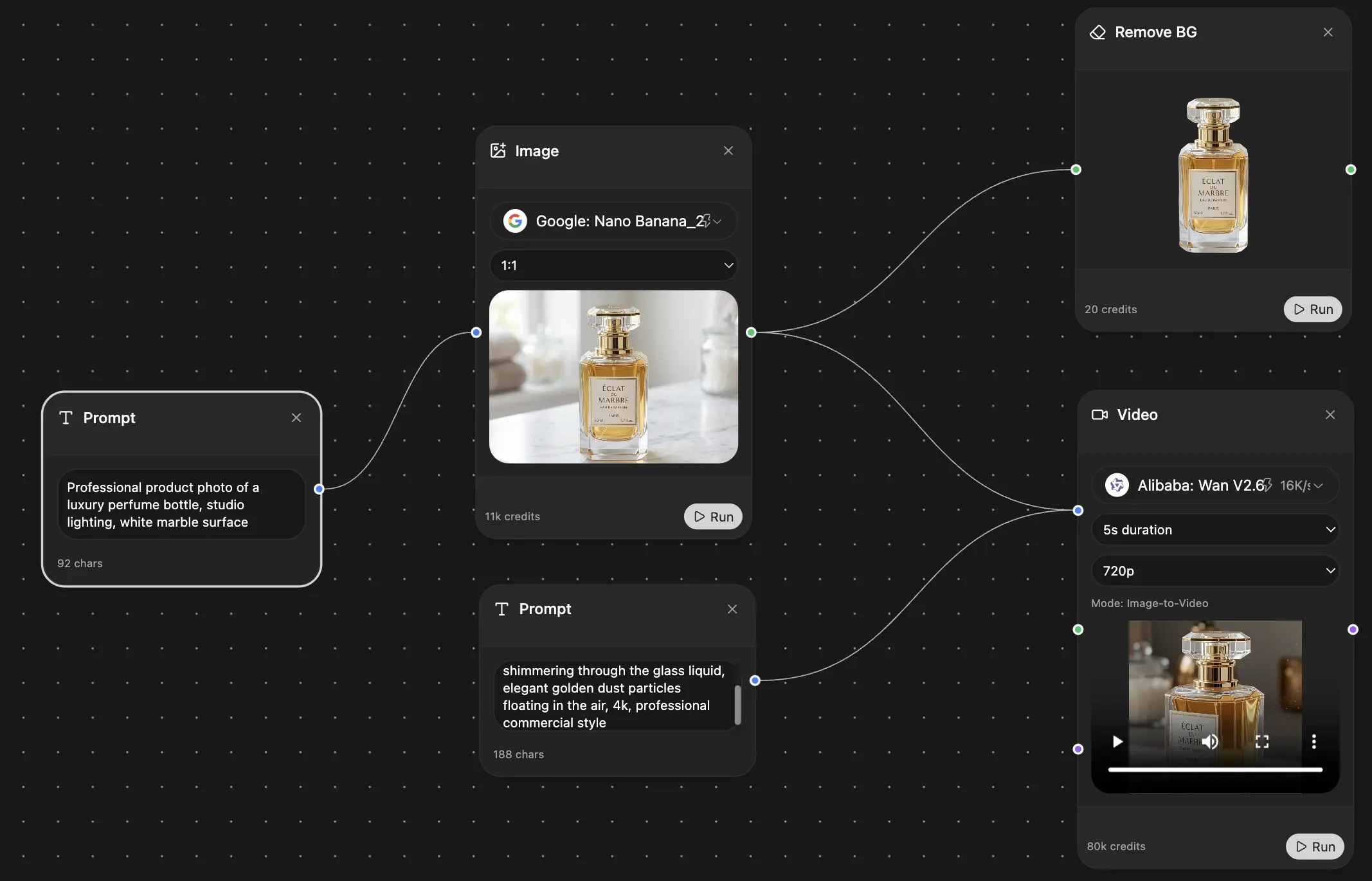
Save hours of work and research
Transparent, High-Value Pricing
Trusted by teams at






Free
No credit card required
- 100 credits daily
- 3 AI models to try
- Basic AI chat
Plus
- 1,000,000 credits/month
- 25+ AI models — GPT, Claude, Gemini, Grok & more
- Agent Mode with web search, computer tools and more
- Creative Studio: image generation and video generation
- Project Library: chat with document, website and youtube, podcast generation, flashcards, reports and more
- Workflow Studio and FocusOS
Professional
- Everything in Plus, and:
- 2,100,000 credits/month
- Pro-exclusive models (Claude Opus, Grok 4, Sonar Pro)
- Motion Tools & Max Mode
- First access to latest features
- Access to additional offers
What Our Users Say
Great Tool after 2 months usage
simplyzubair
I love the way multiple tools they integrated in one platform. So far it is going in right dorection adding more tools.
Best in Kind!
barefootmedicine
This is another game-change. have used software that kind of offers similar features, but the quality of the data I'm getting back and the sheer speed of the responses is outstanding. I use this app ...
simply awesome
MarianZ
I just tried it - didnt wanna stay with it, because there is so much like that out there. But it convinced me, because: - the discord-channel is very response and fast - the number of models are quite...
A Surprisingly Comprehensive and Engaging Experience
bruno.battocletti
Zemith is not just another app; it's a surprisingly comprehensive platform that feels like a toolbox filled with unexpected delights. From the moment you launch it, you're greeted with a clean and int...
Great for Document Analysis
yerch82
Just works. Simple to use and great for working with documents and make summaries. Money well spend in my opinion.
Great AI site with lots of features and accessible llm's
sumore
what I find most useful in this site is the organization of the features. it's better that all the other site I have so far and even better than chatgpt themselves.
Excellent Tool
AlphaLeaf
Zemith claims to be an all-in-one platform, and after using it, I can confirm that it lives up to that claim. It not only has all the necessary functions, but the UI is also well-designed and very eas...
A well-rounded platform with solid LLMs, extra functionality
SlothMachine
Hey team Zemith! First off: I don't often write these reviews. I should do better, especially with tools that really put their heart and soul into their platform.
This is the best tool I've ever used. Updates are made almost daily, and the feedback process is very fast.
reu0691
This is the best AI tool I've used so far. Updates are made almost daily, and the feedback process is incredibly fast. Just looking at the changelogs, you can see how consistently the developers have ...