The 2026 AI Platform Comparison: Which Tool *Actually* Wins?
Tired of juggling AI tools? Our 2026 AI platform comparison reveals which all-in-one solution actually saves you time and money. Your perfect match is inside.
Deciding on the right AI platform feels like standing in a kitchen and asking: do you want a drawer full of specialized gadgets, or one killer multi-tool? You could have a separate, top-of-the-line tool for every single job—a garlic press here, an apple corer there. Or, you could have a high-quality Swiss Army knife that handles almost everything without having to dig through a cluttered drawer.
Your choice really depends on your workflow. Do you need the absolute best performance for one hyper-specific task, or do you value a smooth, integrated process that covers all your bases without giving you a headache?
The AI Showdown: An Unfiltered Introduction

Let's be honest, the AI space is more crowded than a coffee shop with free Wi-Fi. New tools pop up daily, each promising to be the next big thing. You've got for conversation, for complex reasoning, and creative powerhouses like for generating mind-blowing images. It’s a lot to keep track of.
The real problem isn't just the sheer number of options; it's the beautiful chaos it creates. Your browser is probably a graveyard of forgotten tabs, and your credit card statement reads like a who's who of tech startups. This guide isn't just another surface-level ; it’s a practical look at how to bring some order to that chaos and actually get more done.
We’re going to cut through the marketing fluff and figure out which of these platforms are genuinely useful and which are just expensive distractions.
What’s the Real Cost of AI Chaos?
Those subscription fees are only the opening act. The bigger, hidden cost is the "context-switching tax"—that mental whiplash you feel every time you have to jump from one app to another. Copying and pasting between a chatbot, a document editor, and a research tool isn't just annoying; it’s a productivity sinkhole that obliterates your focus.
Actionable Insight: The biggest mistake people make is only looking at features and not the workflow. A platform can have amazing features, but if it doesn't fit how you work, it will just create more friction.
This guide will put the major players head-to-head, including powerful all-in-one solutions like Zemith, to give you a clear picture of what's out there. The goal? To help you consolidate your tools, save money, and get back into your creative flow.
Our Contenders
To set the stage, let's break down the two main approaches you'll find in this AI platform comparison.
Alright, let's get into it and find the tool that will finally let you close all those extra tabs for good.
Understanding the New Power Players in AI
If you thought ChatGPT had a permanent monopoly on the AI world, think again. The landscape has shifted dramatically, turning what felt like a one-horse race into a nail-biting showdown. This isn't just corporate drama; it’s about what this intense competition means for you, your work, and your wallet.
Just as everyone got comfortable, Google Gemini burst onto the scene with all the subtlety of a bull in a china shop. The shake-up has been massive, kicking off a whole new chapter for AI platforms. For us, this is mostly great news—more competition usually leads to better tools and sharper pricing.
But it also creates a new kind of pressure: are you actually using the best tool for the job, or just the one you're used to?
A Tale of Two Titans
The latest numbers tell a pretty wild story. In January 2026, ChatGPT's once-unbreakable grip on the AI chatbot market slipped to 68%, a major slide from its 87.2% share just a year before. A 19.2 percentage point drop is a huge deal, and it signals the end of its uncontested reign. At the same time, Google Gemini’s market share went supernova, jumping from a tiny 5.4% to 18.2%—a mind-boggling 237% increase in just one year. You can dig into the full story in this report on .
This rivalry between the two giants, who now own a combined 86.2% of the market, points to a growing frustration among users. Sticking with just one tool just doesn't cut it anymore.
The Headaches of Platform Hopping
This new duopoly, along with other fantastic niche tools like Claude and Perplexity, has left many of us with a scattered, Frankenstein's monster of a workflow. You might find yourself using one platform for writing, another for coding, and a third for digging up research. All that "platform hopping" is a real productivity killer.
Actionable Insight: The 'one tool to rule them all' mentality is officially dead. The real challenge now is finding a way to harness the power of the best models without drowning in a sea of browser tabs and subscriptions.
This is where the conversation really shifts. Instead of trying to pick a winner in the ChatGPT vs. Gemini fight, what if you could have the best of both worlds—and then some—all in one place? You can learn more about how different models stack up in our guide to the available today.
That’s exactly the problem that integrated platforms like Zemith were designed to solve. By bringing top models like GPT-4o, Claude 3.5 Sonnet, and Gemini together into a single interface, you can stop juggling multiple accounts and scattered workflows. For developers, researchers, and creators, this means you can instantly grab the right tool for any task without the constant, focus-breaking context switching. It’s all about working smarter, not harder.
Comparing AI Features Beyond The Hype

It’s time to look past the marketing hype and get real about what these AI platforms can actually do. It's easy to get dazzled by flashy feature lists, but the real test is how these tools hold up when you're in the trenches of your day-to-day work.
So, instead of just a simple checklist, we're going to put these platforms through their paces with real-world scenarios. Let's see how specialized tools stack up against an all-in-one platform like Zemith when it comes to the features that truly matter.
The Multi-Model Dilemma: Who Gives You The Best Brains?
Not long ago, picking an AI platform meant you were stuck with whatever model it ran on, for better or worse. That's changing fast. The smartest platforms now recognize that different AI models are good at different things. It’s about having the right tool for the right job, like a golfer choosing a specific club for each shot.
For instance, you might love GPT-4o's creative spark for writing ad copy, but find is way better at pulling key details from a dense, technical report. The problem? Hopping between separate platforms for each task is a massive workflow killer—more tabs, more logins, and a whole lot of copy-pasting.
Actionable Insight: Real power isn't just having access to great AI models; it's having the flexibility to switch between them instantly, within the same project, without breaking your concentration.
This is where an integrated approach really shines. A platform like Zemith acts as your central AI command center, giving you access to a whole roster of top-tier models from different providers, all in one clean interface.
- Writing code? Flip over to a model optimized for programming.
- Need a slick graphic? Switch to a leading image generation model on the fly.
- Summarizing a meeting? Pick the model best suited for that analytical grunt work.
This multi-model access is a huge deal. While standalone platforms keep you fenced in, Zemith gives you the freedom to choose the best brain for the job, every single time.
AI Platform Feature Smackdown: Zemith Vs. The Specialists
To make this concrete, let's look at a head-to-head comparison of core features. This table shows how an all-in-one like Zemith stacks up against some of the big names that specialize in one or two areas.
As you can see, while specialists like are fantastic at what they do (in this case, creating stunning images), they force you into a silo. A comprehensive platform like Zemith brings all that functionality under one roof, creating a much more cohesive workflow.
Document Interaction: From Boring PDF To Interactive Assistant
Let's be honest, no one gets excited about digging through a 100-page PDF to find one specific stat. This is one area where AI is making a huge difference, but not all tools are created equal. Basic platforms might give you a simple summary, which is nice, but it's just scratching the surface.
The next step up is being able to "chat" with your documents—asking questions and getting answers pulled directly from the text. But what if you could take it even further? Imagine uploading a dense research paper and having the AI instantly create flashcards to help you study, or a quiz to test what you've learned.
Actionable Insight: The real game-changer is turning static documents into dynamic, interactive assets. With Zemith, you can take a document and convert it into a podcast episode, generate study guides, or even create a presentation outline. Think less "search" and more "create."
For students, researchers, or anyone who deals with a lot of information, this can save a massive amount of time and help you actually retain what you read. When looking for the right tools, understanding these nuances is key, as highlighted in guides to the .
The Coding Assistant: Can It Keep Up With You?
For developers, an AI coding assistant has gone from a cool toy to an essential part of the toolkit. But there’s a massive difference between an assistant that just spits out code snippets and one that actually feels like a partner in your workflow. Most platforms, including those built into editors like , are great at generating code from a prompt.
But the real magic is in the workflow. Can it show you a live preview of your component as you’re building it?
Here’s what that looks like in practice:
- Standard Coding Assistant: You ask for a React component. It gives you the code. You copy it, paste it into your local editor, fire up your server, and check it in the browser. If it’s not right, you head back to the AI and start the whole dance over again. It works, but it's clunky.
- Zemith’s Coding Assistant: You ask for a React component, and Zemith gives you a live, interactive preview right beside the code. You can tweak the prompt or edit the code directly and see your component update in real-time, without ever leaving the platform.
This instant feedback loop is an absolute game-changer for front-end development. It's the difference between having a helpful dictionary and having a senior dev pair-programming with you, and it's a perfect example of how an integrated platform can supercharge your productivity.
Analyzing the True Cost of Your AI Toolkit

Alright, let's talk about the elephant in the room: money. A $20 subscription here, a pack of image credits there—it all starts to add up. When you're comparing AI platforms, the price tag is a huge factor, but the sticker price is rarely the full story.
We're going to dig into the true cost of your AI setup. This means looking beyond the monthly fees to uncover the hidden expenses that are secretly draining your budget and your focus. It’s time for a no-nonsense financial check-up.
Subscription Stacking: The Silent Budget Killer
The most obvious cost is "subscription stacking." You sign up for Plus for its writing prowess, grab a plan for its incredible images, and maybe another tool for coding help. Individually, they seem reasonable. But together? You're suddenly paying $60 a month or more just to have a complete toolkit.
This multi-platform approach feels like you’re building a Frankenstein's monster of a workflow. It’s clunky, expensive, and a huge headache to manage.
Actionable Insight: A single subscription to a platform like Zemith can replace three or four separate ones. You get access to top-tier models for writing, coding, and image creation all under one roof, immediately cutting down on your monthly software spend.
This isn’t just about saving a few bucks; it's about simplifying your entire tech stack and reclaiming your sanity.
Calculating the Hidden Cost of Chaos
Now for the cost that doesn’t show up on your credit card statement: the "chaos tax." This is the productivity you lose every time you have to switch between apps. Every copy-paste from your chatbot to your document editor is a small interruption that breaks your focus and kills your momentum.
Think about it:
- Wasted Time: How many minutes do you lose each day just logging in and out of different tools?
- Mental Drain: The constant context-switching is mentally exhausting, leaving you less creative and more prone to errors.
- Fragmented Knowledge: Your ideas and project assets are scattered across different platforms, making it impossible to build a cohesive knowledge base.
This fragmentation is a major pain point, and it's a big reason why the global AI platforms market is set to explode. The demand for integrated AI solutions is skyrocketing across all industries. This growth highlights just how inefficient fragmented tools really are. You can get more details on these trends and explore the findings of .
If you’re ready to dive deeper into this topic, we've broken down exactly how much these interruptions can cost your business. Learn more about the in our detailed guide.
The All-In-One Advantage: A Simple Cost-Benefit Analysis
So, is it cheaper to use multiple specialized tools or one consolidated platform? Let's do some quick and dirty math.
Imagine you're a content creator. Your monthly AI bill might look something like this:
- ChatGPT Plus: ~$20/month
- Midjourney: ~$30/month
- Transcription Service: ~$15/month
- Total: $65/month
With an all-in-one platform like Zemith, you could cover all those needs—and more—with a single, often more affordable, subscription. Zemith’s Document Assistant can transcribe and summarize, its creative tools handle image generation, and you get access to multiple writing models.
The financial benefit is clear, but the real win is in productivity. By having all your tools in one organized workspace, you eliminate the chaos tax entirely. For busy professionals, that reclaimed time and focus is priceless. This is how you make a financially sound decision that delivers maximum bang for your buck.
Real-World Use Cases: Who Wins For Your Workflow?
Theory is great, but let's be real—results are what matter. Feature lists and pricing tables don't tell you how a platform feels when you're deep in your daily grind. So, let’s get practical and walk through a few ‘day-in-the-life’ scenarios to see how these AI platforms really stack up.
Think of this as your "try before you buy" guide. We'll show you, not just tell you, how each platform fits into (or complicates) your actual work. It’s time to visualize your future productivity.
For The Content Creator Juggling Multiple Media
Picture this: you're a content creator, and your goal is to be everywhere. You just finished recording a killer 20-minute YouTube video breaking down a complex topic. Now, the real work begins. You need to turn that video into a blog post, dream up a catchy title, generate some unique images for the article, and then craft a bunch of social media posts to get the word out.
Here’s how that plays out on different platforms:
The Specialist Route: You start by uploading your video to a transcription service. Then you copy that text into to write the blog post. After that, you head over to , wrestle with prompts for 30 minutes to get the right images, and finally, bounce back to ChatGPT to draft your tweets and LinkedIn posts. It's a journey, to say the least, and your focus is shattered by the end.
The Zemith Workflow: You upload your video file directly into a Zemith Project. From there, the Document Assistant transcribes it. Without leaving the screen, you ask the AI to draft a blog post from the transcript, suggest five SEO-friendly titles, and generate a summary. Then, you just switch over to the integrated Creative Tools to generate hero images, all within the same project space where your content lives.
Actionable Insight: The difference isn't just about convenience; it's about maintaining creative momentum. Juggling multiple apps is like trying to have a conversation in a room with five different people talking at once. A unified workspace like Zemith keeps you in the zone.
This cohesive process is a game-changer for creators. What used to be a chaotic, multi-tab nightmare becomes a single, fluid motion from start to finish.
For The Developer On A Tight Deadline
Now, let's switch hats. You're a developer tasked with building a new feature. You’ve hit a snag with a tricky React component and need to debug some legacy code that looks like it was written by a caffeinated squirrel. Your deadline is looming, and every minute counts.
Let’s compare the workflows:
The Specialist Route: You copy your buggy code and paste it into ChatGPT or , asking for help. You get a suggestion, copy it back into your local VS Code environment, run the server, and check the browser. It’s still broken. You repeat this cycle, bouncing between your code editor, the AI chat, and your browser, losing precious time with each context switch.
The Zemith Workflow: You open the Coding Assistant in Zemith. You paste your code and not only get debugging suggestions but also see a live, interactive preview of your React component right next to the code. As you tweak the code or refine the prompt, the preview updates in real-time. No more context switching—you can see the impact of your changes instantly.
This immediate feedback loop completely changes the development process. Instead of a clunky, stop-and-start dance, you can iterate at the speed of thought. It’s the difference between asking a friend for directions and having a live GPS guide you turn-by-turn. For professionals looking to streamline their work, exploring different can reveal just how much time can be saved.
In both of these real-world examples, the winner isn't the tool with the longest feature list. It's the platform that minimizes friction and maximizes focus. An integrated environment like Zemith, with its Projects and Library, keeps all your assets, conversations, and creations in one logical place, turning chaotic work into a streamlined process.
The Final Verdict: How to Choose Your AI Copilot
Alright, we’ve been through the feature smackdowns, the workflow wars, and the nitty-gritty details. It’s time to land this plane. The big question in any AI platform comparison is always the same: which one is right for you?
The honest answer? It depends. I know, not the dramatic, fireworks-filled conclusion you were hoping for, but picking an AI assistant is a lot like choosing your go-to coffee shop—it's personal. The right choice hinges entirely on your daily grind.
Are you a casual user who just needs quick answers, or a power user juggling a dozen complex projects? A simple, free tool might be perfect for basic tasks. But the moment your needs get more demanding, the math changes. This is where an all-in-one 'Super App' like Zemith starts to look pretty compelling.
A Simple Framework for Your Decision
With over 1 billion people now using AI tools globally, the market is buzzing. Just look at the numbers: 's mobile apps alone are projected to hit 557 million monthly active users in 2026. This boom also shines a light on the sheer chaos of tool-hopping. Engineers debug in one app, writers rephrase in another, and researchers fact-check across a dozen browser tabs. It’s a mess.
To cut through the noise, ask yourself one simple question:
What’s the biggest point of friction in my workflow right now?
Is it the cost of juggling multiple subscriptions? The time you lose copying and pasting between different apps? Or is it the frustration of hitting a wall because you don't have the right tool for a specific job? Once you pinpoint the pain, the solution gets a lot clearer. If you really want to get methodical, our guide on building a can help you weigh your options.
Who Benefits Most from an All-in-One Platform?
This decision tree gives you a simple visual breakdown of how different roles can think about their AI workflow.

As the chart shows, while specialized tools have their moments, creators, developers, and researchers often have overlapping needs that create a messy workflow. This is where an integrated platform really starts to shine.
Let’s be direct. If your work involves a mix of writing, research, coding, or creative tasks, you're paying a "chaos tax" every single day.
Platforms like Zemith are built to eliminate that tax. They do this by bundling a variety of AI models and purpose-built tools—like a live Coding Assistant or a Document Assistant that can turn a dense PDF into a podcast—all into one unified workspace. The goal is to give you the confidence to pick the right AI copilot and finally get your work done without the digital whiplash.
Your Questions Answered About AI Platforms
We get it. Picking the right AI platform can feel like a huge decision, almost like choosing a business partner but with more subscription fees. To help you cut through the noise, we’ve rounded up some of the most common questions we hear and are tackling them with some straight talk.
Is an All-in-One Platform Better Than Specialized Tools?
For most professionals—the ones juggling writing, coding, research, and a dozen other things—an all-in-one platform is a massive win. It’s like having a well-stocked toolbox instead of just a single, lonely screwdriver. The biggest advantage isn't just saving money on multiple subscriptions; it's the time you get back by not constantly bouncing between different apps.
Sure, if all you do is generate images, a dedicated tool like might be all you need. But for anyone whose work is more varied, an integrated platform like Zemith just makes more sense.
Can Zemith Really Replace ChatGPT, Gemini, and Midjourney?
That's the big question, isn't it? The simple answer is that Zemith doesn't really "replace" them. Instead, it brings their best features together under one roof and adds a powerful layer of organization on top.
You get direct access to fantastic models from providers like and all in one interface. But then you also get purpose-built tools that those platforms just don't have, like a sophisticated Document Assistant and built-in project management to keep everything straight.
You're not forced to choose between the best AI models. You’re getting access to the best of all of them without the headache of managing a dozen different accounts and workflows.
It's really about shifting from a scattered pile of individual tools to a single, organized command center for all your AI-powered work.
What Is the Biggest Mistake People Make When Choosing an AI Platform?
Hands down, the single biggest mistake is getting mesmerized by a long list of features and completely ignoring how the tool fits into your actual workflow. A platform might have all the bells and whistles, but if using it feels clunky or doesn't match how you work, it’s just going to cause friction. It’s like buying a Formula 1 car to get groceries—impressive, but totally impractical for the job.
Before you commit to anything, take a hard look at how it will smooth out your process from start to finish. For example, think about how a unified workspace like Zemith's Projects feature can help you keep research, drafts, and creative assets all in one place for a single topic. In any ai platform comparison, the best choice is always the one that makes your day easier, not more complicated.
Ready to stop juggling tabs and start getting things done? Experience the power of a truly unified AI workspace. Zemith brings all the best models and tools together so you can focus on what matters.
Explore Zemith Features
Everything you need. Nothing you don't.
One subscription replaces five. Every top AI model, every creative tool, and every productivity feature, in one focused workspace.
Every top AI. One subscription.
ChatGPT, Claude, Gemini, DeepSeek, Grok & 25+ more







Always on, real-time AI.
Voice + screen share · instant answers
What's the best way to learn a new language?
Immersion and spaced repetition work best. Try consuming media in your target language daily.
Voice + screen share · AI answers in real time
Image Generation
Flux, Nano Banana, Ideogram, Recraft + more

Write at the speed of thought.
AI autocomplete, rewrite & expand on command
Any document. Any format.
PDF, URL, or YouTube → chat, quiz, podcast & more
Video Creation
Veo, Kling, Grok Imagine and more

Text to Speech
Natural AI voices, 30+ languages
Code Generation
Write, debug & explain code
Chat with Documents
Upload PDFs, analyze content
Your AI, in your pocket.
Full access on iOS & Android · synced everywhere
Your infinite AI canvas.
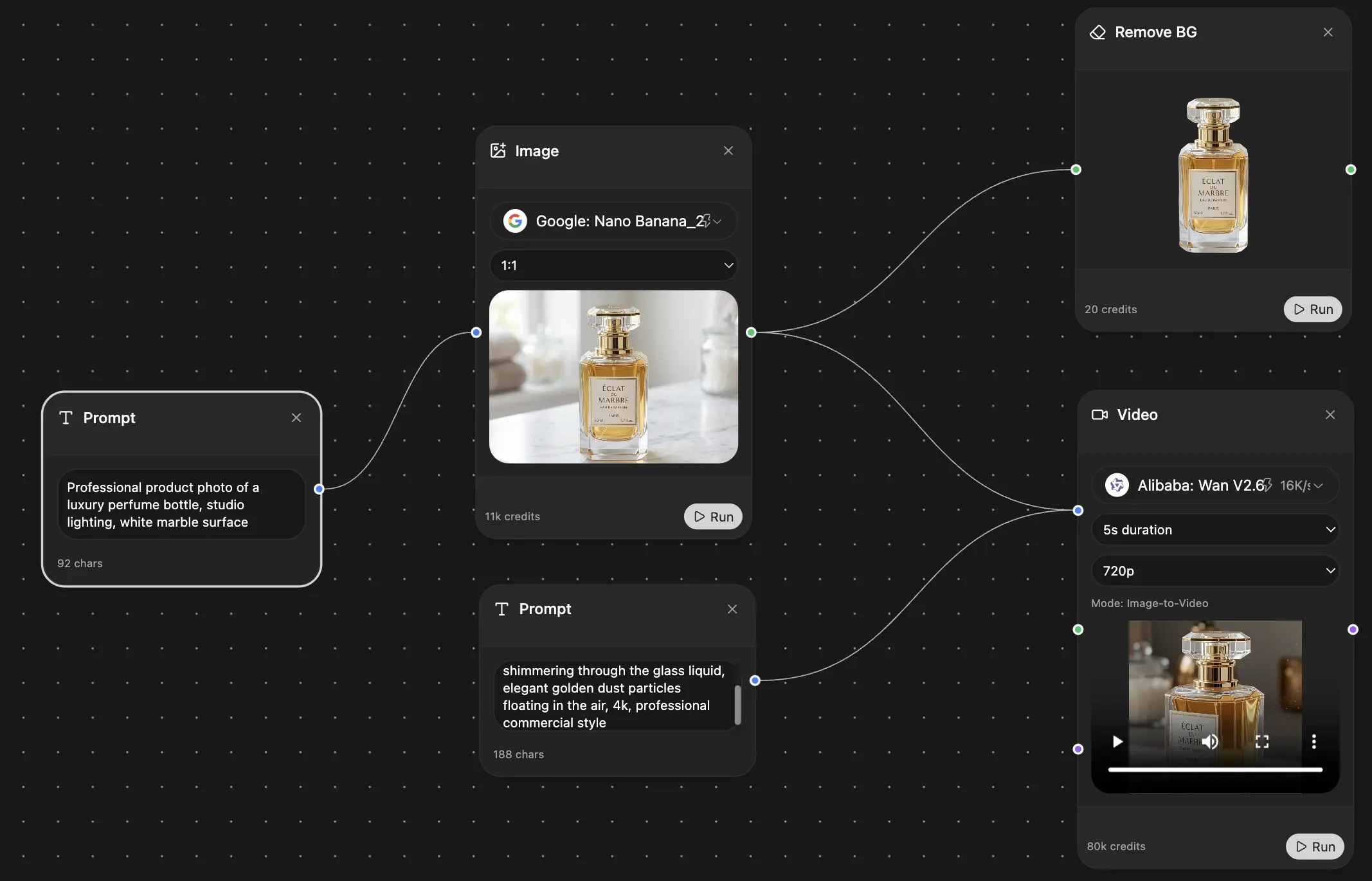
Chat, image, video & motion tools — side by side
Save hours of work and research
Transparent, High-Value Pricing
Trusted by teams at






Free
No credit card required
- 100 credits daily
- 3 AI models to try
- Basic AI chat
Plus
- 1,000,000 credits/month
- 25+ AI models — GPT, Claude, Gemini, Grok & more
- Agent Mode with web search, computer tools and more
- Creative Studio: image generation and video generation
- Project Library: chat with document, website and youtube, podcast generation, flashcards, reports and more
- Workflow Studio and FocusOS
Professional
- Everything in Plus, and:
- 2,100,000 credits/month
- Pro-exclusive models (Claude Opus, Grok 4, Sonar Pro)
- Motion Tools & Max Mode
- First access to latest features
- Access to additional offers
What Our Users Say
Great Tool after 2 months usage
simplyzubair
I love the way multiple tools they integrated in one platform. So far it is going in right dorection adding more tools.
Best in Kind!
barefootmedicine
This is another game-change. have used software that kind of offers similar features, but the quality of the data I'm getting back and the sheer speed of the responses is outstanding. I use this app ...
simply awesome
MarianZ
I just tried it - didnt wanna stay with it, because there is so much like that out there. But it convinced me, because: - the discord-channel is very response and fast - the number of models are quite...
A Surprisingly Comprehensive and Engaging Experience
bruno.battocletti
Zemith is not just another app; it's a surprisingly comprehensive platform that feels like a toolbox filled with unexpected delights. From the moment you launch it, you're greeted with a clean and int...
Great for Document Analysis
yerch82
Just works. Simple to use and great for working with documents and make summaries. Money well spend in my opinion.
Great AI site with lots of features and accessible llm's
sumore
what I find most useful in this site is the organization of the features. it's better that all the other site I have so far and even better than chatgpt themselves.
Excellent Tool
AlphaLeaf
Zemith claims to be an all-in-one platform, and after using it, I can confirm that it lives up to that claim. It not only has all the necessary functions, but the UI is also well-designed and very eas...
A well-rounded platform with solid LLMs, extra functionality
SlothMachine
Hey team Zemith! First off: I don't often write these reviews. I should do better, especially with tools that really put their heart and soul into their platform.
This is the best tool I've ever used. Updates are made almost daily, and the feedback process is very fast.
reu0691
This is the best AI tool I've used so far. Updates are made almost daily, and the feedback process is incredibly fast. Just looking at the changelogs, you can see how consistently the developers have ...